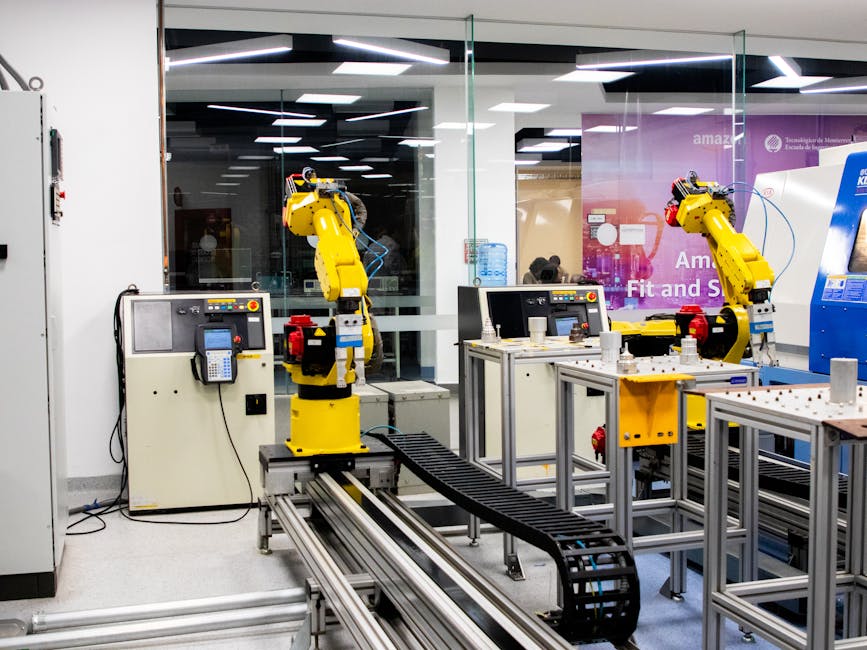
In today’s fast-paced digital landscape, the quest for efficiency and innovation has never been more critical. Robotic Process Automation (RPA) stands at the forefront of this transformation, offering businesses the ability to automate repetitive tasks and streamline operations. This article will delve into the fundamental concepts of RPA, exploring its benefits, applications, and challenges, while providing insights into how it can revolutionize the way you work. Whether you’re a business leader or an aspiring professional, understanding RPA is essential for navigating the future of automation. Join us as we uncover the potential of this game-changing technology.
What Is Robotic Process Automation (RPA)?
Robotic Process Automation, commonly known as RPA, is a technology that allows businesses to automate repetitive tasks. By using software robots (or “bots”), RPA can streamline processes that were once manual and time-consuming. But what does this mean for your business?
At its core, RPA mimics human actions to execute tasks across various applications. These robots interact with software just like a person would, but they do it faster and without fatigue. This leads to increased efficiency and reduced errors in process execution.
- RPA can handle tasks like data entry, invoice processing, and report generation.
- It operates across multiple systems, making it highly versatile.
- Robots can work 24/7, ensuring that processes run smoothly without breaks.
One of the key benefits of RPA is its ability to free up human employees from mundane tasks. This allows them to focus on more strategic activities that require critical thinking and creativity. Imagine a world where your team spends less time on repetitive work and more on innovation!
RPA is not just about replacing human effort; it’s about enhancing it. By automating routine processes, businesses can improve accuracy, speed, and overall productivity. But how does RPA actually work?
| RPA Components | Function |
|---|---|
| Bot Creator | Designs and configures the automation workflows. |
| Bot Runner | Executes the tasks as per the defined workflows. |
| Control Room | Manages and monitors the bots. |
RPA software is designed to integrate seamlessly with existing systems. This means businesses don’t need to overhaul their entire IT infrastructure to reap the benefits of automation. Instead, RPA can be implemented alongside current processes, enhancing them without disruption.
In addition to efficiency, RPA also helps in maintaining compliance. By automating processes, businesses can ensure that every step is documented and executed consistently. This is particularly important in industries that are heavily regulated.
- Improved accuracy: Robots don’t make mistakes like humans do.
- Cost savings: Automating processes can significantly reduce operational costs.
- Scalability: RPA can easily scale up or down based on business needs.
To sum up, RPA is a powerful tool that helps businesses automate their processes effectively. It not only boosts efficiency but also allows teams to focus on higher-value tasks. As automation continues to evolve, understanding RPA will be crucial for any business looking to stay competitive in the digital age.
Historic Evolution of Robotic Process Automation
The journey of robotic process automation (RPA) is fascinating. It began in the early 2000s, driven by the need for businesses to increase efficiency and reduce costs. Automation was not new, but RPA brought a unique twist by mimicking human actions in digital environments.
Initially, businesses relied on simple scripts and macros to automate specific tasks. These early forms of automation were limited in scope. They could handle repetitive tasks but lacked the intelligence to adapt to changing conditions.
As technology advanced, so did RPA. The introduction of more sophisticated software meant that automation could now handle complex processes. This evolution allowed for better integration with existing systems, making it easier for businesses to adopt robotic solutions.
In the mid-2010s, RPA gained significant traction. Companies began to realize the potential of robotic process automation to transform their operations. The ability to deploy “robots” that could work around the clock without fatigue was revolutionary.
- Increased efficiency in task execution.
- Reduction in operational costs.
- Minimized human error in repetitive tasks.
The technology also evolved to include artificial intelligence (AI) and machine learning (ML). This integration created intelligent automation, enabling RPA to not only follow predefined rules but also learn from data. Businesses found that this combination could lead to even greater process improvements.
By 2020, RPA was no longer just a buzzword; it became a core component of digital transformation strategies. Organizations across various sectors began leveraging RPA to streamline workflows and enhance operational resilience.
The future of RPA looks promising. With advancements in natural language processing and cognitive capabilities, RPA is poised to tackle even more complex tasks. Imagine robots that can understand context and make decisions based on data.
As robotic process automation continues to evolve, it raises an important question: How will businesses adapt to these changes?
| Year | Milestone in RPA |
|---|---|
| 2000s | Introduction of basic automation tools |
| 2010s | Rise of RPA software with advanced capabilities |
| 2020s | Integration of AI and ML in RPA solutions |
In conclusion, the historic evolution of robotic process automation reflects a broader trend toward digital transformation in business. As RPA technology continues to advance, it’s essential for companies to stay informed and ready to embrace these changes. The future of work may look different, but the benefits of automation will remain clear.
Impact of RPA on Employment and Workforce
The rise of RPA, or robotic process automation, is reshaping the landscape of employment and the workforce. As businesses increasingly turn to automation, many are left wondering: what does this mean for jobs?
RPA is designed to automate repetitive tasks typically performed by humans. This can lead to increased efficiency and reduced operational costs for businesses. However, there’s a flip side to this innovation.
On one hand, RPA can free employees from mundane tasks, allowing them to focus on more strategic work. This can lead to improved job satisfaction and greater overall productivity.
On the other hand, there’s concern about job displacement. As robots take over routine processes, some roles may become obsolete. This has sparked a significant debate about the future of work.
- RPA can enhance productivity by automating repetitive tasks.
- Job displacement is a real concern with the rise of robotic process automation.
- Employees may find new roles that require more complex skills.
As companies adopt RPA, they often need to retrain their workforce. This is where the conversation about upskilling comes into play. Employees can transition into roles that require more analytical thinking and creativity-areas where human skills shine.
Moreover, RPA can create new job opportunities. While some positions may vanish, others will emerge, particularly in areas like RPA management and software development.
| Job Changes Due to RPA | Impact |
|---|---|
| Routine Task Automation | Reduces need for manual processing |
| Creation of New Roles | Increased demand for RPA specialists |
| Upskilling Opportunities | Employees learn new, valuable skills |
The integration of RPA into business processes is not just about replacing humans with robots. It’s about finding a balance that benefits both the company and its workforce.
As we navigate this transformation, it’s essential for businesses to communicate openly with their employees. Understanding how RPA will impact roles can alleviate fears and foster a culture of adaptability.
In conclusion, while RPA may disrupt certain job functions, it also offers a pathway to new opportunities and enhanced roles. The key is to embrace change and focus on lifelong learning.
As the world of automation evolves, so too must our approach to workforce development. Will we see a future where humans and robots collaborate seamlessly? Only time will tell.
Benefits of Implementing RPA in Businesses
Robotic Process Automation (RPA) is transforming how businesses operate. By automating repetitive tasks, RPA allows companies to focus on what truly matters-innovation and customer satisfaction. But what are the specific benefits of implementing RPA in your business?
One significant advantage of RPA is increased efficiency. Automation helps streamline processes, reducing the time it takes to complete tasks. This means employees can redirect their efforts towards more strategic initiatives.
Moreover, RPA minimizes human error. Robots are programmed to follow specific rules, ensuring consistency and accuracy in data handling. This is especially crucial in industries where precision is paramount.
- Enhanced productivity
- Reduced operational costs
- Improved compliance and accuracy
Another benefit is scalability. As your business grows, RPA can easily adapt to increased workloads without the need for significant additional resources. This flexibility allows businesses to respond to changing demands quickly.
Furthermore, RPA can lead to better employee satisfaction. By automating mundane tasks, employees can engage in more meaningful work. This shift not only boosts morale but also fosters innovation within teams.
| Benefit | Description |
|---|---|
| Cost Savings | Reduction in labor costs and operational expenses. |
| Faster Turnaround | Quicker processing times for tasks and data handling. |
RPA also enhances data management. With automation, businesses can efficiently collect, process, and analyze data. This leads to better decision-making and insights, which are essential for staying competitive.
Lastly, RPA fosters a culture of continuous improvement. As businesses implement automation, they often reevaluate their processes, leading to further optimizations. This ongoing refinement is crucial in today’s fast-paced business environment.
In summary, the benefits of implementing RPA in businesses are vast. From increased efficiency and cost savings to improved employee satisfaction and data management, RPA is not just a trend-it’s a strategic advantage. Are you ready to embrace the future of work?
Limitations of Robotic Process Automation Explained
Robotic Process Automation (RPA) is a powerful tool that can streamline various business processes. However, it’s essential to understand that RPA is not a one-size-fits-all solution.
While RPA can automate repetitive tasks with ease, it does have its limitations. One significant constraint is its reliance on structured data. RPA excels when dealing with predictable, rule-based processes but struggles with unstructured data.
- RPA works best with structured data.
- Unstructured data can complicate automation.
- Human oversight is often still required.
Another limitation is that RPA can only mimic human actions. This means that it cannot make decisions or interpret nuances like a human worker can. For example, if a process requires judgment or emotional intelligence, RPA may fall short.
Moreover, RPA is not designed for complex processes. While it can handle straightforward tasks, integrating multiple systems with varying levels of complexity can be challenging.
| Limitation | Explanation |
|---|---|
| Data Dependency | Requires structured data for effective automation. |
| Decision-Making | Cannot make complex decisions or interpret nuances. |
| Complex Processes | Struggles with integrating multiple complex systems. |
Additionally, RPA can lead to a false sense of security. Businesses may believe that once they implement RPA, they can completely eliminate human involvement. However, this is not the case. Human oversight is often necessary to manage exceptions and ensure processes run smoothly.
Lastly, the initial setup and ongoing maintenance of RPA software can be resource-intensive. Companies need to invest time and financial resources to train staff and maintain the robotic systems.
- Human oversight is crucial for exception handling.
- Initial setup can require significant resources.
- RPA should complement, not replace, human workers.
In summary, while RPA offers significant benefits in terms of efficiency and cost savings, it’s vital to recognize its limitations. Understanding these constraints can help businesses leverage RPA more effectively, ensuring that it serves as a valuable tool rather than a hindrance.
So, the next time you consider implementing RPA, remember to evaluate your processes critically. Is automation the right fit, or do you need a more nuanced solution?
Difference Between RPA and Artificial Intelligence
Robotic Process Automation (RPA) and Artificial Intelligence (AI) are often mentioned together, but they serve different purposes in the realm of automation. Understanding their distinctions is crucial for businesses looking to optimize their operations.
RPA is primarily focused on automating repetitive, rule-based tasks. It uses software robots to handle structured data and execute predefined processes. For instance, if you have a routine task like data entry or invoice processing, RPA can take over these functions efficiently.
On the other hand, AI encompasses a broader range of technologies that enable machines to learn from data and make decisions. While RPA is about automating specific tasks, AI involves understanding, reasoning, and even predicting outcomes.
- RPA: Automates repetitive tasks.
- AI: Learns and makes decisions.
- Focus: RPA is process-focused; AI is data-driven.
RPA operates based on a set of rules. It doesn’t adapt or learn from experiences. If a process changes, the RPA software needs to be reprogrammed. This makes it ideal for stable environments where processes are unlikely to evolve.
Conversely, AI systems can adapt to new data and improve over time. For example, a machine learning model can analyze trends and adjust its strategies accordingly. This adaptability is what sets AI apart from RPA.
| Feature | RPA | AI |
|---|---|---|
| Task Automation | Yes | No |
| Learning Capability | No | Yes |
| Data Handling | Structured | Structured & Unstructured |
In many cases, RPA and AI can complement each other. For example, RPA can handle repetitive tasks, while AI can analyze the data generated from those tasks to provide insights. This synergy can lead to more efficient business processes.
Imagine a scenario where RPA processes customer orders while AI analyzes customer behavior. Together, they can enhance customer satisfaction and streamline operations.
So, which one should you choose for your business? It often depends on your specific needs. If your primary goal is to automate straightforward, repetitive tasks, RPA is your go-to solution.
However, if you need systems that can learn and adapt, AI is the better choice. In many cases, a combination of both can yield the best results, maximizing efficiency and effectiveness across various processes.
In conclusion, understanding the difference between RPA and AI is essential for leveraging automation effectively in your business. Both technologies have their strengths and can be powerful tools when used appropriately.
Unassisted RPA: What You Need to Know
Unassisted RPA, or unmonitored robotic process automation, is a game changer for businesses looking to optimize their operations. Unlike traditional automation, unassisted RPA operates independently, executing tasks without human intervention. This can significantly enhance efficiency and reduce errors in various processes.
But what exactly does this mean for your business? Unassisted RPA can handle repetitive tasks such as data entry, invoice processing, and report generation. By deploying software robots, companies can free up their human employees to focus on more strategic initiatives.
- Automates repetitive tasks
- Reduces operational costs
- Improves accuracy and speed
Incorporating unassisted RPA into your workflow can lead to substantial cost savings. Businesses often find that the initial investment in RPA software pays off quickly through increased productivity and lower labor costs. So, how do you get started with RPA?
First, identify the processes that are most suitable for automation. Look for tasks that are rule-based, repetitive, and high-volume. This will help you determine which areas can benefit the most from robotic process automation.
| Process Type | Ideal for RPA |
|---|---|
| Data Entry | Yes |
| Customer Support | Partially |
| Invoice Processing | Yes |
Once you’ve identified suitable processes, the next step is to select the right RPA software. There are numerous options available, each with its unique features and capabilities. Some popular choices include UiPath, Automation Anywhere, and Blue Prism.
When selecting software, consider factors like ease of use, scalability, and support. A well-chosen RPA tool can streamline your processes and enhance your overall business efficiency.
- Evaluate software options
- Consider scalability
- Look for strong customer support
Finally, after implementing unassisted RPA, monitor its performance closely. Regularly assess the impact on your processes and make adjustments as necessary. Continuous improvement is key to maximizing the benefits of robotic process automation.
In conclusion, unassisted RPA is not just a trend; it’s a powerful tool that can transform your business operations. By automating repetitive tasks, companies can achieve greater efficiency and focus on what truly matters.
Exploring Hyperautomation and Its Relation to RPA
Hyperautomation is a term gaining traction in the world of technology and business. But what does it really mean, especially in relation to RPA, or robotic process automation?
At its core, hyperautomation extends the capabilities of RPA. While RPA focuses on automating repetitive tasks, hyperautomation combines multiple technologies to automate complex business processes. This includes artificial intelligence, machine learning, and even advanced analytics.
So, why should businesses care about hyperautomation? The answer lies in efficiency. By integrating RPA with other technologies, organizations can streamline operations, reduce errors, and ultimately save time and money.
Here are some key components of hyperautomation:
- Integration of RPA with AI.
- Utilization of machine learning for better decision-making.
- Emphasis on end-to-end process automation.
In the world of business, the synergy between RPA and hyperautomation can transform how tasks are completed. Imagine a scenario where data entry is not just automated, but the software also learns to predict errors and rectify them in real-time.
This is the promise of hyperautomation. It allows for a more intelligent approach to process automation, creating a dynamic environment where robots and humans can collaborate more effectively.
Let’s break down some of the benefits of integrating RPA into hyperautomation:
| Benefit | Description |
|---|---|
| Increased Efficiency | Automates complex tasks, reducing processing time. |
| Enhanced Accuracy | Minimizes human error through automated processes. |
| Cost Reduction | Lowers operational costs by optimizing resource use. |
The combination of RPA and hyperautomation is not just a trend; it’s a strategic move that can redefine how businesses operate.
As organizations look to the future, embracing such technologies can lead to significant advantages. But it’s essential to remember that the journey towards hyperautomation requires careful planning and execution.
What are the steps to take? It begins with identifying processes that can benefit from automation. From there, integrating RPA with other technologies becomes a more straightforward task.
In summary, hyperautomation and RPA are intertwined concepts that can drive remarkable improvements in business efficiency. By understanding and leveraging these technologies, companies can not only stay competitive but also thrive in an increasingly automated world.
The future is here, and it’s automated. Isn’t it time to explore how you can harness the power of RPA and hyperautomation for your business?
Outsourcing vs. In-house RPA Solutions
When considering RPA (Robotic Process Automation), businesses often face a critical decision: should they outsource their automation needs or develop solutions in-house? Both options come with distinct advantages and challenges.
Outsourcing RPA can provide immediate access to expertise and advanced software tools. This can be particularly beneficial for companies that lack the technical resources or knowledge to implement process automation effectively.
- Access to specialized skills
- Reduced operational costs
- Faster implementation timelines
On the other hand, in-house RPA solutions allow for greater control over process development and customization. Businesses can tailor their robotic processes to meet specific needs and integrate seamlessly with existing systems.
However, building an in-house team requires significant investment in training and resources. It also necessitates ongoing management of both the robots and the underlying data infrastructure.
| Outsourcing RPA | In-house RPA |
|---|---|
| Quick access to expertise | Full control over processes |
| Lower initial costs | Customizable solutions |
| Less time-consuming | Requires ongoing investment |
So, what’s the right choice for your business? It largely depends on your specific needs, budget, and long-term goals. For companies aiming for rapid deployment, outsourcing might be the way to go. But if your focus is on building a sustainable and tailored robotic process, an in-house solution could serve you better.
Ultimately, both approaches can lead to successful automation outcomes. The key is to assess your organization’s capacity to manage and maintain the chosen solution.
- Evaluate your current resources
- Consider long-term objectives
- Analyze potential ROI
In conclusion, whether you choose to outsource or go in-house, the goal remains the same: to enhance efficiency through robotic process automation. By weighing the pros and cons, you can make an informed decision that aligns with your business strategy.
In conclusion, RPA, or robotic process automation, stands as a transformative force in the landscape of business operations. By leveraging software robots to automate repetitive tasks, organizations can not only enhance efficiency but also significantly reduce operational costs. The ability of RPA to integrate seamlessly with existing systems further underscores its appeal; businesses can harness its capabilities without the need for extensive overhauls or complex implementations. As we look to the future, the role of RPA in driving digital transformation will only expand, with advancements in artificial intelligence and machine learning further enhancing its effectiveness. Companies that embrace RPA are not just keeping pace with technological advancements; they are positioning themselves to thrive in an increasingly competitive environment. The potential for improved accuracy, faster processing times, and freeing up valuable human resources for more strategic initiatives makes RPA an essential component of modern business strategy. As you consider the implementation of RPA in your organization, remember that the journey is not solely about technology but also about reimagining how work gets done. With the right approach, RPA can lead to a culture of innovation, where employees are empowered to focus on higher-value tasks, ultimately driving growth and success in the long run. Embracing robotic process automation is not just a trend—it’s a crucial step toward future-proofing your business in an era defined by rapid change and digital evolution.
Leave a Reply