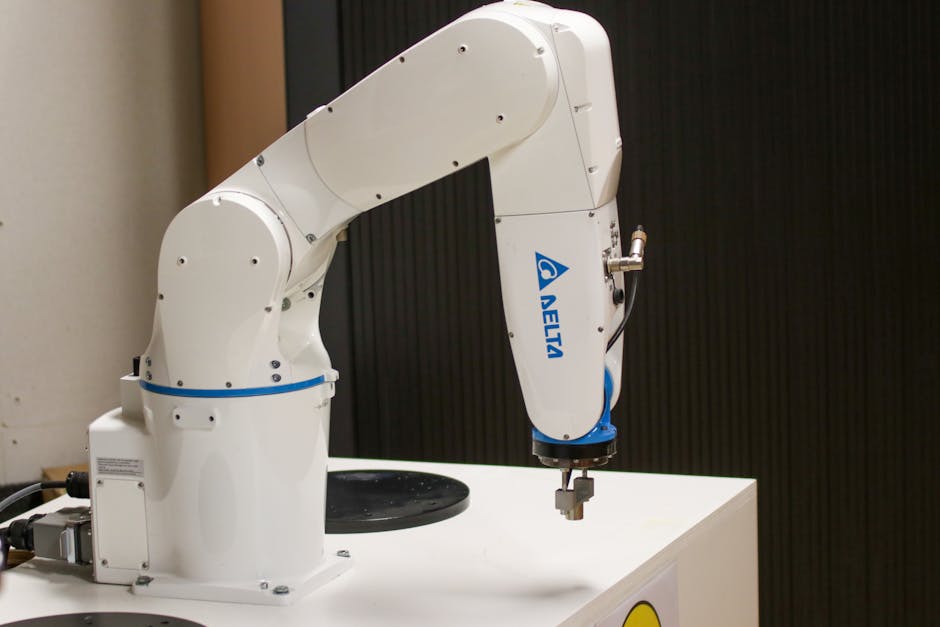
In today’s fast-paced digital landscape, efficiency is more crucial than ever, and robotic process automation (RPA) offers a compelling solution. Imagine freeing your team from mundane, repetitive tasks, allowing them to focus on strategic initiatives that drive growth and innovation. This article will delve into the fundamentals of RPA, exploring its benefits, applications, and the technology’s evolution over time. By understanding how RPA works and its potential impact on your organization, you’ll be equipped to harness its capabilities for a more streamlined, productive future. Join us as we uncover the transformative potential of RPA in reshaping the way businesses operate.
What is Robotic Process Automation (RPA)?
Robotic Process Automation, commonly known as RPA, is a technology that allows businesses to automate repetitive tasks. By using software robots, organizations can streamline their processes and improve efficiency. But what does this really mean for businesses today?
At its core, RPA involves the use of software to perform tasks that are usually handled by humans. These tasks can include data entry, processing transactions, and managing records. Essentially, RPA mimics human actions to carry out these processes faster and more accurately.
- Enhances operational efficiency
- Reduces human error
- Increases productivity
One of the primary benefits of RPA is its ability to handle high-volume tasks without fatigue. Imagine a robot that can work around the clock without taking breaks. This is particularly beneficial for businesses that require consistent performance and reliability.
RPA is not just about replacing human workers; it’s about allowing them to focus on more strategic tasks. By automating mundane activities, employees can dedicate their time to higher-value work that requires critical thinking and creativity.
| RPA Benefits | Impact on Business |
|---|---|
| Cost Reduction | Lower operational costs |
| Scalability | Easier to scale operations |
Furthermore, RPA can integrate seamlessly with existing systems. This means businesses do not need to overhaul their current processes to benefit from automation. Instead, they can enhance their operations using the tools they already have.
However, it’s essential to understand that RPA is not a one-size-fits-all solution. Each business has unique processes that may require tailored automation strategies. So, how do you determine which tasks to automate?
- Identify routine tasks
- Assess time-consuming processes
- Evaluate error-prone activities
In conclusion, Robotic Process Automation is revolutionizing how businesses operate. With its ability to automate repetitive tasks, RPA not only boosts efficiency but also empowers employees to focus on what truly matters. As automation technologies continue to evolve, the potential for RPA in various sectors will only grow, making it a crucial aspect of modern business strategy.
How Does RPA Work in Business?
Robotic Process Automation (RPA) is transforming how businesses operate. At its core, RPA involves using software robots to automate repetitive tasks that were once performed by humans. This means that mundane and rule-based processes can now be handled by these digital workers, allowing human employees to focus on more strategic initiatives.
So, how does RPA work in practice? It starts with identifying specific tasks or processes that are time-consuming and prone to human error. These tasks might include data entry, invoice processing, or customer service inquiries. By automating these processes, businesses can improve efficiency and reduce operational costs.
- Increased efficiency
- Reduced errors
- Cost savings
- Enhanced compliance
Once the tasks are identified, RPA software is programmed to mimic human actions. This can involve interacting with various applications, extracting data, and performing calculations. The beauty of RPA lies in its ability to work across different systems without the need for deep integration.
Imagine a scenario where an organization receives hundreds of invoices daily. Instead of having employees manually enter data from these invoices into their accounting system, RPA can take over this task. The software robots will read the invoices, extract necessary information, and input it into the system seamlessly.
| RPA Benefits | Description |
|---|---|
| Speed | RPA can complete tasks much faster than humans. |
| Accuracy | Reduces the likelihood of errors in data handling. |
| Scalability | Easily scale operations without increasing workforce. |
It’s not just about speed and efficiency, though. RPA also enhances compliance by ensuring that processes are executed consistently according to established rules. This is particularly important in industries like finance and healthcare, where regulatory compliance is critical.
Moreover, RPA can gather and analyze data more effectively than a human worker. By processing large volumes of information quickly, businesses can gain insights that would be difficult to achieve manually. This data-driven approach allows for better decision-making.
But what about the human element? While RPA takes over routine tasks, it doesn’t eliminate the need for human oversight. Employees can focus on more complex issues that require creativity and critical thinking.
In summary, RPA is a powerful tool for businesses looking to enhance their operations. By automating repetitive tasks, organizations can drive efficiency, reduce errors, and free up valuable resources for innovation. Isn’t it exciting to think about how robotic process automation can reshape the future of work?
Benefits of Implementing RPA in Organizations
Robotic Process Automation (RPA) is a game-changer for many businesses today. By automating repetitive tasks, organizations can significantly enhance their efficiency. But what exactly are the benefits of implementing RPA?
First and foremost, RPA streamlines processes. It allows businesses to automate mundane tasks that would otherwise consume valuable human resources. This not only saves time but also reduces the likelihood of errors.
Consider the following advantages of RPA:
- Increased efficiency in operations
- Reduced operational costs
- Enhanced accuracy and compliance
- Improved employee satisfaction
One of the most compelling reasons to adopt RPA is its ability to improve accuracy. Robots don’t get tired or distracted, which means they can handle tasks with a level of precision that humans might struggle to maintain over long periods. This is particularly beneficial in data entry and processing tasks.
Furthermore, RPA can lead to significant cost savings. By automating routine processes, organizations can reallocate their human workforce to more strategic initiatives. This not only optimizes resources but also fosters innovation, as employees can focus on higher-value tasks.
Let’s take a look at a comparison of traditional processes versus RPA-enhanced processes:
| Traditional Process | RPA Process |
|---|---|
| Manual data entry | Automated data entry |
| High error rates | Minimal error rates |
| Slow processing times | Fast processing times |
The impact of RPA on employee morale is another vital benefit. When employees are freed from tedious tasks, they can engage in more meaningful work. This not only boosts job satisfaction but can also lead to higher retention rates.
Moreover, RPA provides organizations with the flexibility to scale operations quickly. As business needs change, RPA can be easily adjusted to accommodate new processes without extensive training or restructuring.
In summary, the implementation of RPA in organizations can lead to remarkable benefits. Enhanced efficiency, accuracy, and employee satisfaction are just a few reasons why businesses are increasingly turning to automation. Isn’t it time your organization explored the potential of RPA?
As you consider these advantages, remember that the right RPA strategy can transform not just your processes, but also your overall business landscape.
Challenges and Limitations of Robotic Process Automation
Robotic Process Automation (RPA) has gained significant traction in recent years, transforming how businesses operate. However, like any technology, it comes with its own set of challenges and limitations. Understanding these can help organizations make informed decisions about implementing RPA solutions.
One major challenge is the complexity of processes. Not all tasks are suitable for automation. RPA excels in repetitive, rule-based tasks, but what happens when a process requires human judgment or is subject to frequent changes? This is where businesses often stumble.
- Complexity of processes can hinder automation.
- Human judgment is sometimes irreplaceable.
- Frequent changes in processes may require constant updates.
Another limitation is the initial cost of implementation. While RPA can lead to cost savings in the long run, the upfront investment in software, training, and infrastructure can be daunting. Companies must weigh these costs against the potential benefits of automation.
Additionally, there’s the issue of scalability. Some RPA solutions work well for small-scale implementations but struggle to adapt as the business grows. Businesses need to ensure that their RPA systems can handle increased workloads without sacrificing performance.
| Challenge | Impact |
|---|---|
| Complex Processes | Limited automation potential |
| High Initial Costs | Budget constraints |
| Scalability Issues | Performance drops |
Moreover, RPA relies heavily on data. If the data being used is inaccurate or poorly structured, the effectiveness of automation can be compromised. Businesses must prioritize data quality to maximize the benefits of robotic process automation.
Another aspect to consider is the workforce impact. Employees may feel threatened by automation, fearing job loss. While RPA can free up human workers to focus on more strategic tasks, managing this transition is crucial for maintaining morale and productivity.
- Data quality is essential for effective RPA.
- Employee morale can be affected by automation.
- Strategic communication is vital during transitions.
Lastly, regulatory compliance can pose challenges. Different industries have varying regulations that must be adhered to. Ensuring that automated processes comply with these regulations requires careful planning and oversight.
In summary, while RPA offers numerous benefits, it’s essential to acknowledge its challenges. By understanding these limitations, businesses can better prepare for successful implementation and realize the full potential of automation in their processes.
Historic Evolution of RPA Technology
The journey of robotic process automation (RPA) is fascinating and reflects the broader trends in technology and business. RPA has evolved significantly over the last few decades, transforming how organizations approach process automation.
Initially, automation was limited to simple tasks, often requiring manual coding and extensive IT involvement. This early phase focused on automating repetitive tasks within specific software environments. But as technology advanced, so did the capabilities of RPA.
In the late 1990s and early 2000s, the concept of RPA began to take shape. Businesses started looking for ways to streamline operations and reduce costs. The introduction of user-friendly software meant that even non-technical staff could create automation scripts.
This was a game-changer. Suddenly, automation was accessible to a wider audience. Companies recognized the potential of using robotic process automation to improve efficiency and accuracy across various business processes.
- Increased efficiency in task execution
- Reduction in human error
- Enhanced compliance and reporting
As we moved into the 2010s, RPA technology matured. Vendors began to offer sophisticated software platforms that could handle more complex processes. This era saw the rise of intelligent automation, which combined RPA with artificial intelligence (AI).
The integration of AI allowed RPA to handle tasks that required decision-making based on data analysis. This capability expanded the scope of automation beyond just repetitive tasks to include more cognitive processes.
By 2015, RPA was no longer just a buzzword; it became a strategic imperative for many organizations. Companies began to invest heavily in RPA tools to stay competitive. The focus shifted from merely automating tasks to reengineering entire business processes.
A significant factor in the adoption of RPA was the need for organizations to adapt to the digital age. Businesses recognized that to thrive, they had to leverage technology to enhance their operations.
| Year | RPA Milestone |
|---|---|
| 1990s | Early automation concepts emerge |
| 2010s | Growth of intelligent automation |
| 2015 | RPA becomes a strategic necessity |
As we entered the 2020s, RPA continued to evolve, with a strong emphasis on scalability and integration. Organizations began to realize that RPA could not only automate tasks but also enhance the overall customer experience.
The future of RPA looks promising. With advancements in machine learning and AI, the technology will likely continue to transform how businesses operate. But what does this mean for the workforce?
While some fear that robots will replace human jobs, the reality is that RPA can free employees from mundane tasks, allowing them to focus on more strategic initiatives. This shift could lead to a more engaged and productive workforce.
Impact of RPA on Employment and Workforce
The rise of Robotic Process Automation (RPA) is transforming the business landscape, and its impact on employment is a hot topic. Many wonder how automation will affect jobs and the workforce. Will robots take over tasks traditionally performed by humans? Let’s explore this together.
RPA primarily focuses on automating repetitive tasks, which can lead to significant changes in various sectors. By streamlining processes, businesses can improve efficiency and reduce operational costs. However, this shift raises questions about job displacement and the future of human employment.
On one hand, RPA can eliminate mundane tasks, allowing employees to focus on more strategic and creative work. This shift can enhance job satisfaction and lead to more fulfilling roles. On the other hand, there is concern about the potential for job loss in sectors heavily reliant on routine processes.
- Increased efficiency in operations
- Reduction of human error
- Shift towards more strategic roles
It’s essential to recognize that while RPA may reduce the need for certain tasks, it also creates new opportunities. As businesses adopt automation, they often require skilled workers to manage and maintain these robotic systems. This means that upskilling and reskilling become vital for the workforce.
According to recent studies, the demand for roles related to RPA and automation is on the rise. Companies are looking for individuals who can work alongside these technologies, ensuring they function effectively. This shift can lead to a more tech-savvy workforce, ready to tackle the challenges of the future.
To illustrate this point, consider the following table showing projected job growth in RPA-related fields:
| Job Role | Projected Growth (%) |
|---|---|
| RPA Developer | 25% |
| Automation Analyst | 20% |
| Process Improvement Specialist | 15% |
As you can see, there are promising prospects for those willing to adapt and learn new skills in the age of automation. Embracing RPA doesn’t necessarily mean the end of jobs; instead, it offers a chance for evolution in the workforce.
In conclusion, the impact of RPA on employment is multifaceted. While it may automate specific tasks, it also opens doors for new roles and opportunities. The key lies in how businesses and employees respond to this technological shift. Are we ready to embrace the future of work?
Applications of RPA Across Industries
Robotic Process Automation (RPA) is revolutionizing how businesses operate. By automating repetitive tasks, companies can enhance efficiency and reduce errors. But where exactly is RPA making an impact? Let’s explore its applications across various industries.
In the finance sector, RPA is transforming processes such as invoice processing, reconciliation, and compliance reporting. By automating these tasks, financial institutions can ensure accuracy and speed, allowing human employees to focus on more strategic activities.
- Invoice processing
- Reconciliation
- Compliance reporting
Healthcare is another industry benefiting significantly from RPA. Here, automation streamlines patient registration, appointment scheduling, and claims processing. This not only enhances patient experience but also optimizes administrative workflows.
Consider how RPA assists in the insurance industry. It automates claims processing and underwriting tasks, leading to faster decision-making. This allows insurance companies to respond quickly to customer needs, improving overall service quality.
| Industry | RPA Applications |
|---|---|
| Finance | Invoice processing, reconciliation |
| Healthcare | Patient registration, claims processing |
| Insurance | Claims processing, underwriting |
Retail is yet another arena where RPA shines. From inventory management to order processing, automation helps retailers keep up with demand while minimizing errors. Imagine a world where stock levels are updated in real-time thanks to robotic software!
Manufacturing industries also leverage RPA for quality control and supply chain management. By automating data entry and reporting tasks, businesses can enhance production efficiency and reduce waste. Isn’t it fascinating how automation can lead to such significant improvements?
- Quality control
- Supply chain management
- Data entry
In the telecommunications sector, RPA assists with customer service operations. Automating routine inquiries and service requests allows human agents to concentrate on complex issues. This not only boosts customer satisfaction but also optimizes workforce productivity.
As we can see, RPA’s versatility spans numerous industries. Its ability to automate mundane tasks frees up human resources for more meaningful work. With the rapid advancements in technology, the future of RPA looks incredibly promising. Could your industry be next to embrace this transformative technology?
Difference Between RPA and Artificial Intelligence
Robotic Process Automation (RPA) and Artificial Intelligence (AI) are often mentioned together, but they serve different purposes. While both technologies aim to enhance efficiency in business processes, their approaches and capabilities differ significantly.
RPA is primarily about automating repetitive tasks. It uses software robots to handle rule-based processes that require little to no human intervention. For instance, RPA can manage data entry, invoice processing, and report generation-tasks that are mundane but essential for business operations.
On the other hand, AI involves creating systems that can perform tasks that typically require human intelligence. This includes understanding natural language, recognizing patterns, and making decisions based on data. AI can learn from experience, adapt to new inputs, and even improve over time.
- RPA focuses on automating specific tasks.
- AI is about simulating human intelligence.
- RPA is rule-based, while AI can learn and adapt.
Think of RPA as a tool for efficiency. It streamlines processes by taking over repetitive tasks that don’t require much thought. In contrast, AI is more about enabling machines to think and learn, making it capable of handling complex scenarios where decision-making is key.
For example, in a customer service setting, RPA might automate the process of logging customer inquiries into a system. Meanwhile, AI could analyze those inquiries to identify trends or suggest solutions based on past interactions.
| Feature | RPA | AI |
|---|---|---|
| Nature | Rule-based | Learning-based |
| Use Cases | Data entry, invoice processing | Natural language processing, predictive analytics |
So, why does this distinction matter? Understanding the difference between RPA and AI can help businesses choose the right tools for their needs. If your goal is to automate simple, repetitive tasks, RPA is likely the way to go. However, if you need to analyze data or make complex decisions, AI could provide the insights you need.
In summary, while RPA and AI can work together within a business to enhance efficiency, they are fundamentally different technologies. RPA excels at automating straightforward processes, while AI brings in advanced capabilities that mimic human thinking.
The combination of both can lead to a more streamlined and intelligent business operation, but knowing when to use each technology is key to maximizing their potential.
Steps to Implement RPA in Your Business
Implementing Robotic Process Automation (RPA) in your business can seem daunting at first. However, breaking it down into manageable steps makes the process much easier. Let’s explore how to effectively integrate RPA into your workflow.
First, identify the processes that are ripe for automation. Look for repetitive tasks that consume significant time and resources. These could be anything from data entry to invoice processing.
Ask yourself: Which tasks are the most time-consuming for your team?
- Data entry
- Invoice processing
- Customer support inquiries
- Report generation
Once you have pinpointed these tasks, it’s time to assess their complexity. Not all processes are suitable for RPA. Focus on those that are rule-based and require minimal human intervention.
Next, gather data on the current performance of these tasks. This will help you understand the efficiency baseline before automation. You might find it useful to create a table to visualize this data.
| Task | Time Spent (Hours/Week) |
|---|---|
| Data Entry | 10 |
| Invoice Processing | 8 |
After gathering this information, the next step is to choose the right RPA software. There are various options available, each with its own strengths and weaknesses.
Consider factors like ease of use, scalability, and support. A user-friendly interface can make a significant difference, especially for teams that may not be tech-savvy.
Once you’ve selected your RPA software, it’s time to design your automation workflows. This involves mapping out how the robots will interact with the existing processes.
Think about how each step will be executed. Will the robots need to pull data from multiple sources?
- Define the workflow clearly
- Identify data sources
- Determine output requirements
After designing the workflows, conduct a pilot test. This is crucial for identifying any issues before a full-scale rollout. Monitor the performance closely and gather feedback from users.
Finally, once the pilot is successful, you can roll out the RPA solution across your business. Make sure to provide adequate training for your team to ensure they’re comfortable working alongside the robots.
In conclusion, implementing RPA in your business involves careful planning and execution. By following these steps, you can enhance efficiency and free up your team to focus on more strategic tasks.
Remember, the goal of RPA is not just to automate tasks but to transform processes for better outcomes. So, are you ready to take the leap into automation?
In conclusion, the transformative impact of Robotic Process Automation (RPA) on businesses cannot be overstated. As organizations increasingly seek ways to enhance efficiency, reduce costs, and improve accuracy, RPA emerges as a powerful solution that streamlines repetitive tasks and liberates human employees to focus on more strategic initiatives. By automating mundane processes, companies not only accelerate their operations but also foster a culture of innovation and agility. The versatility of RPA tools, capable of integrating seamlessly with existing systems, ensures that businesses of all sizes can leverage these technologies without overhauling their current infrastructure.
Moreover, the continuous advancements in RPA technologies, coupled with the growing emphasis on data-driven decision-making, position RPA as a cornerstone of digital transformation strategies. As organizations adopt RPA, they gain valuable insights through data analytics, enabling them to refine their processes further and enhance customer experiences. This synergy between automation and analytics underscores the necessity for businesses to stay ahead of the curve and embrace the endless possibilities that RPA offers.
As we look to the future, it is clear that RPA will play a pivotal role in shaping the workforce landscape. While some may fear that automation could threaten jobs, the reality is that RPA is designed to augment human capabilities rather than replace them. By taking over repetitive tasks, RPA allows employees to engage in more meaningful work, fostering job satisfaction and professional growth. Companies that prioritize RPA implementation will not only improve their operational efficiency but also cultivate a more engaged and skilled workforce.
In essence, embracing RPA is not merely about keeping pace with technological advancements; it is about unlocking potential and driving sustainable growth. Businesses that integrate RPA into their operational framework will find themselves better equipped to navigate the complexities of a rapidly changing market. As you consider the future of your organization, remember that RPA is not just a trend but a strategic imperative that can lead to lasting success. By investing in RPA today, you are laying the groundwork for a more efficient, innovative, and competitive tomorrow.
Leave a Reply