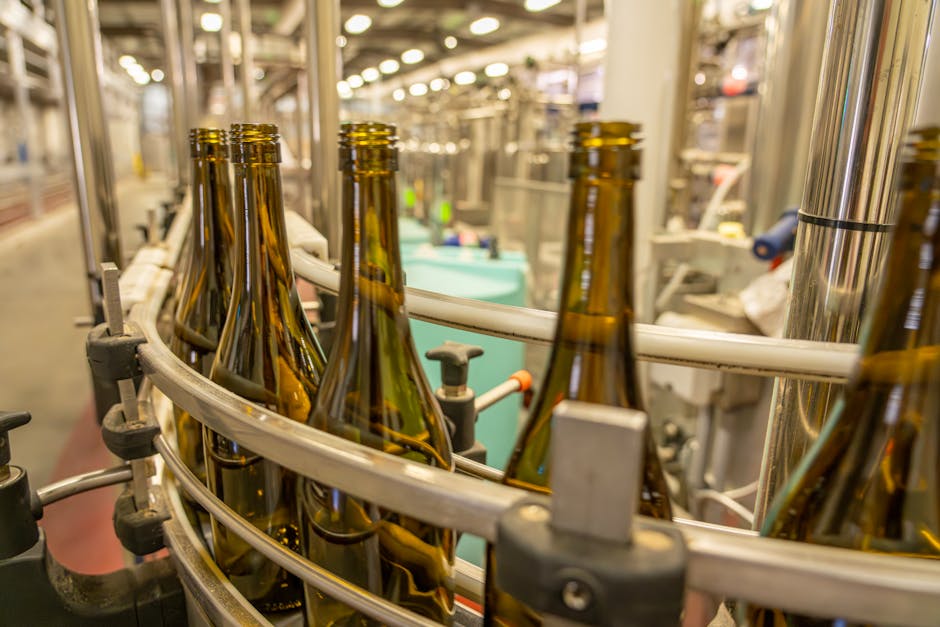
In today’s fast-paced manufacturing landscape, understanding flow production is crucial for businesses aiming to enhance efficiency and reduce waste. This method, characterized by its seamless and continuous process, can transform the way products are made, ultimately leading to increased profitability and customer satisfaction. In this article, we will delve into the key principles of flow production, explore its benefits and challenges, and provide practical strategies for successful implementation. Whether you’re a small business owner or part of a larger organization, mastering flow production can be the key to elevating your operational success.
What is Flow Production? A Detailed Explanation
Flow production, often referred to as continuous production, is a manufacturing process designed for high efficiency. It revolves around the concept of producing goods in a streamlined and systematic manner. This method is particularly beneficial for mass production where large quantities of products are required within a specific timeframe.
In essence, flow production involves a series of steps that are arranged in a sequential order. Each step in the process is designed to flow smoothly into the next. This minimizes delays and maximizes productivity. But what does this mean for manufacturers?
- High efficiency due to streamlined processes
- Reduced production time
- Consistent quality of products
Flow production is commonly used in industries such as automotive, electronics, and consumer goods. These sectors benefit immensely from the repetitive nature of the process. By utilizing a production line, companies can achieve a consistent output of products, which is crucial for meeting market demands.
The key components of flow production include:
– Production Line: A series of workstations where tasks are performed in a specific order.
– Assembly Process: Each workstation typically has a defined role in assembling or processing the product.
– Continuous Flow: The objective is to keep the production moving without interruption.
| Component | Description |
|---|---|
| Production Line | A sequence of processes that products move through. |
| Assembly Process | Specific tasks performed at each workstation. |
| Continuous Flow | Uninterrupted movement of products through the line. |
When implementing flow production, time management is crucial. Each step must be timed to ensure that the entire process runs smoothly. If one part of the line slows down, it can affect the entire production rate.
This brings us to another important aspect: the balance of work across the production line. Properly balancing tasks among workers and machines helps maintain a steady flow.
How do companies achieve this balance?
- Analyzing workflow to identify bottlenecks
- Adjusting workstations to optimize efficiency
- Regularly monitoring production rates
In conclusion, flow production is a powerful method for manufacturing that emphasizes efficiency and consistency. By understanding the components and strategies behind this process, manufacturers can significantly enhance their productivity and product quality. Whether you’re in the automotive industry or producing consumer electronics, flow production can be a game changer.
Advantages of Flow Production in Manufacturing
Flow production, often referred to as continuous production, offers several advantages that can significantly enhance manufacturing efficiency. By organizing the production process in a streamlined manner, manufacturers can achieve a higher output with less waste.
One of the primary benefits of flow production is its ability to reduce production time. Since each product moves through a set sequence of operations, the time taken to produce each item is minimized. This efficiency is critical in today’s fast-paced market.
Additionally, flow production allows for better resource utilization. Equipment and labor are used more effectively, leading to lower operational costs. This is particularly beneficial for businesses engaged in mass production, where profit margins can be tight.
- Increased efficiency
- Reduced production time
- Better resource utilization
Another advantage is the consistency in product quality. Since the process is standardized, variations in quality are minimized. This consistency is vital for maintaining customer satisfaction and brand reputation.
Moreover, flow production facilitates easier identification of bottlenecks in the manufacturing process. When a line is set up for continuous flow, any disruptions can be quickly spotted and addressed, preventing costly delays.
| Advantage | Description |
|---|---|
| Reduced Lead Time | Quick production cycles enhance delivery speed. |
| Lower Costs | Efficient use of materials and labor reduces overall costs. |
| Quality Control | Standardized processes lead to consistent quality. |
In addition to these operational benefits, flow production can enhance employee morale. When workers see products moving smoothly through the assembly line, it creates a sense of accomplishment. They can easily track progress and witness the fruits of their labor.
However, it’s essential to recognize that flow production is not suitable for every manufacturing scenario. Companies must assess their product types and demand patterns to determine if this method aligns with their goals.
Ultimately, the advantages of flow production in manufacturing are clear. It promotes efficiency, reduces costs, and ensures product quality. For businesses looking to stay competitive in a challenging market, adopting flow production techniques can be a game changer.
Have you considered how flow production could benefit your manufacturing process? It might be time to explore this efficient approach to see if it fits your operational needs.
Disadvantages of Flow Production: What to Consider
Flow production, while efficient, has its share of disadvantages that manufacturers should carefully consider. Understanding these drawbacks can help in making informed decisions about production processes.
One significant disadvantage of flow production is its inflexibility. Once a flow line is set up for a specific product, it can be challenging to switch to a different product or adjust the production line. This rigidity can lead to inefficiencies if market demands change suddenly.
Moreover, the initial setup costs for flow production can be quite high. The need for specialized equipment and the design of a streamlined assembly line requires substantial investment. For smaller manufacturers, this might be a barrier to entry.
- High initial setup costs
- Inflexibility in changing production lines
- Risk of overproduction due to continuous flow
Another concern is the potential for overproduction. In a flow production system, the continuous nature of the process can lead to producing more products than needed. This not only ties up capital but can also result in excess inventory, which can be costly to manage.
Additionally, there’s a reliance on a consistent supply of materials. Any disruption in the supply chain can halt the entire production process. This reliance makes manufacturers vulnerable to external factors, such as supplier issues or logistical challenges.
| Disadvantage | Impact |
|---|---|
| Inflexibility | Hard to adapt to market changes |
| High Setup Costs | Barrier for small manufacturers |
| Overproduction | Increased inventory costs |
Another downside is the potential for decreased product quality. In a fast-paced flow production environment, the focus on speed can sometimes compromise quality control. If not managed properly, this can lead to defects in the finished products.
Employee morale can also suffer in a flow production setup. Repetitive tasks can lead to boredom and disengagement among workers. This can ultimately affect productivity and the overall work environment.
- Potential for decreased product quality
- Employee disengagement due to repetitive tasks
- Vulnerability to supply chain disruptions
In summary, while flow production offers many advantages, it’s essential to weigh these against the potential disadvantages. Inflexibility, high costs, and risks related to quality and employee satisfaction are key factors to consider.
Are these drawbacks worth it for your manufacturing needs? It’s a question that requires careful thought and analysis. The decision to implement flow production should align with your specific goals and market conditions.
How to Implement Flow Production Effectively
Flow production is a method that can significantly streamline your manufacturing process. But how do you implement it effectively?
First, it’s essential to understand the core principles of flow production. This technique focuses on a continuous, streamlined process where products move through various stages of production without unnecessary delays. The goal is to create a smooth flow that minimizes waiting times and maximizes efficiency.
To start, assess your current production line. Identify bottlenecks that slow down the flow. This could be anything from equipment malfunctions to inefficient layout. Once you pinpoint these issues, you can begin to redesign your process.
Here are some key steps to consider:
- Analyze the current workflow
- Redesign the layout for optimal flow
- Implement standardized work procedures
- Invest in automation where possible
Next, focus on standardizing your processes. Each step in the production line should have a clear, repeatable procedure. This not only ensures consistency but also helps workers understand their roles in the flow production system.
What about the assembly process? It’s vital to ensure that each worker understands their specific tasks. Training is crucial here. When everyone knows their responsibilities, the overall production time decreases, and the quality of the products improves.
A well-structured flow production system can lead to significant cost savings. Consider the following benefits:
| Benefit | Description |
|---|---|
| Reduced Lead Times | Faster production cycles result in quicker delivery. |
| Higher Product Quality | Standardization leads to fewer defects. |
| Lower Costs | Efficiency reduces operational costs. |
As you implement flow production, remember to monitor your results. Use metrics to track efficiency and quality. Are your products moving through the line as expected? Are there still delays?
Continuous improvement is key. If you notice persistent issues, don’t hesitate to revisit your process design.
In conclusion, effective implementation of flow production hinges on understanding your current processes, standardizing workflows, and making necessary adjustments. With the right approach, you can create a seamless production line that not only meets demand but also enhances product quality and reduces costs.
Are you ready to take your manufacturing to the next level with flow production?
Flow Production vs Batch Production: Key Differences
Flow production and batch production are two distinct manufacturing processes that cater to different needs. Understanding their key differences can help businesses choose the right approach for their production requirements.
Flow production is characterized by a continuous movement of products through the manufacturing line. This method is ideal for mass production, where identical products are made in large quantities. On the other hand, batch production involves creating products in groups or batches, allowing for more variety and flexibility.
One of the primary differences between the two methods lies in the time and setup involved. Flow production requires a consistent, uninterrupted process, which means setup times are minimized once the system is in place. Conversely, batch production often involves more frequent setup changes, which can increase downtime.
Here’s a quick comparison:
| Feature | Flow Production | Batch Production |
|---|---|---|
| Production Volume | High | Moderate |
| Flexibility | Low | High |
| Setup Time | Minimal | Frequent |
In flow production, the assembly line is optimized for efficiency. This means that every worker or machine has a specific task, and products move seamlessly from one station to the next. This streamlined process is perfect for industries like automotive manufacturing, where time is of the essence.
In contrast, batch production allows for a more diverse range of products. Manufacturers can switch between different items with relative ease. This is particularly advantageous for businesses that need to respond quickly to market demands or produce seasonal items.
Another key difference is the level of investment required. Flow production setups often demand a higher initial investment in machinery and technology. However, this investment can pay off through lower production costs over time.
Batch production, while less costly upfront, may lead to higher per-unit costs due to the need for frequent changeovers. This trade-off is essential for manufacturers to consider when deciding which production method suits their needs best.
In summary, the choice between flow production and batch production ultimately depends on the specific requirements of the business. Are you looking for high efficiency and mass output, or do you need flexibility to produce a variety of products? Understanding these differences can guide your decision-making process effectively.
Continuous Flow Manufacturing: An Overview
Continuous flow manufacturing is a production approach that emphasizes the seamless movement of products through various stages of production. The goal is to minimize delays and enhance efficiency. In this model, products continuously flow through the manufacturing line, reducing waiting times and optimizing resource use.
This method is particularly effective for mass production of standardized products. By creating a continuous flow, manufacturers can achieve higher output levels while maintaining consistent quality. Have you ever wondered how some companies manage to produce at such remarkable speeds? The secret often lies in their flow production strategies.
One of the key advantages of continuous flow manufacturing is its ability to streamline processes. When production is organized in a linear fashion, tasks are completed in a systematic order. This not only reduces the time needed for each assembly step but also minimizes the chances of errors.
Here are some benefits of adopting continuous flow manufacturing:
- Increased efficiency and productivity
- Reduced lead times
- Lower operational costs
- Enhanced product quality
In a continuous flow setup, each workstation is designed to handle a specific task. This specialization allows workers to focus on their responsibilities, leading to improved speed and quality. The flow of materials and products is carefully controlled to ensure that everything moves smoothly from one stage to the next.
A well-designed continuous flow line can significantly reduce waste. By eliminating bottlenecks and ensuring that every resource is utilized effectively, companies can enhance their overall production process. This not only benefits the bottom line but also contributes to a more sustainable manufacturing environment.
Here’s a quick comparison of traditional mass production versus continuous flow manufacturing:
| Aspect | Traditional Mass Production | Continuous Flow Manufacturing |
|---|---|---|
| Production Flow | Batch processing | Continuous movement |
| Lead Time | Longer | Shorter |
| Flexibility | Limited | High |
In summary, continuous flow manufacturing offers a modern solution to the challenges faced in traditional mass production. By focusing on efficiency and minimizing delays, this approach can lead to significant improvements in both production output and product quality. It’s a fascinating topic, isn’t it? Understanding how these systems work can provide valuable insights into the future of manufacturing.
The Role of Assembly Lines in Flow Production
In the realm of manufacturing, assembly lines play a crucial role in flow production. This method emphasizes efficiency and speed, allowing companies to produce goods in a continuous manner. But what exactly makes assembly lines so integral to flow production?
At its core, flow production involves a streamlined process where products move sequentially from one workstation to another. Each station is responsible for a specific task, ensuring that the overall production process remains smooth. This approach not only minimizes time wastage but also enhances the quality of the final products.
One key advantage of using assembly lines in flow production is the reduction of idle time. When each worker knows their role and the process is well-defined, the workflow becomes more predictable. This predictability can lead to increased output and efficiency.
- Minimized idle time
- Increased output
- Defined roles for workers
Moreover, assembly lines facilitate mass production. By breaking down the manufacturing process into smaller, manageable tasks, companies can produce large quantities of products without sacrificing quality. This is particularly beneficial in industries where demand is high and consistency is key.
The continuous nature of flow production also means that manufacturers can respond quickly to changes in market demand. If a certain product sees a spike in popularity, the assembly line can be adjusted to increase production without significant downtime.
| Advantages of Assembly Lines | Impact on Flow Production |
|---|---|
| Efficiency in production | Higher output rates |
| Consistency in quality | Reduced defects |
| Flexibility to scale | Rapid market response |
The interaction between workers and machines on an assembly line is also vital. Each component of the process is designed to complement the others, creating a cohesive flow. This synergy not only improves productivity but also fosters a team-oriented environment.
Have you ever considered how the design of an assembly line can impact production time? A well-structured line can significantly reduce the time it takes to assemble a product, making it easier to meet consumer demands.
In conclusion, assembly lines are a fundamental aspect of flow production. They enable manufacturers to produce large quantities of products efficiently while maintaining quality. As industries evolve, the importance of refining these systems will only grow, ensuring that businesses can adapt to ever-changing market landscapes.
Historical Development of Flow Production Techniques
Flow production, a key innovation in manufacturing, has its roots in the early 20th century. The concept emerged as a solution to the growing demand for efficient mass production. Initially, manufacturers relied on traditional methods, which were often slow and labor-intensive.
As industries expanded, the limitations of these methods became apparent. This led to the development of more streamlined processes. The introduction of assembly lines marked a significant turning point in flow production techniques.
One of the earliest examples of flow production was Henry Ford’s automotive assembly line in 1913. Ford realized that by breaking down the manufacturing process into smaller tasks, he could reduce the time it took to produce a car. This approach not only sped up production but also lowered costs.
The assembly line allowed for continuous flow of products, which was revolutionary. Workers would perform specific tasks repeatedly, leading to increased efficiency. This model became the foundation for modern mass production.
- Henry Ford’s assembly line introduced in 1913
- Focus on efficiency and cost reduction
- Foundation for modern manufacturing techniques
As flow production gained traction, other industries began to adopt similar techniques. The food and beverage sector, for example, embraced continuous flow processes to enhance efficiency. This shift was not just about speed; it also improved product consistency.
By the mid-20th century, flow production techniques had evolved further. Automation began to play a crucial role, allowing for even greater efficiency. Machines could handle repetitive tasks, freeing workers to focus on more complex activities.
| Year | Development |
|---|---|
| 1913 | Introduction of the assembly line by Henry Ford |
| 1950s | Rise of automation in manufacturing |
The late 20th century saw the emergence of lean manufacturing. This approach aimed to minimize waste while maximizing productivity. It built upon the principles of flow production, focusing on improving the overall process.
Lean techniques often involve continuous improvement, or “kaizen.” This philosophy encourages ongoing evaluation and refinement of processes. It’s a perfect fit for flow production, where efficiency is key.
Today, flow production techniques continue to evolve. With advancements in technology, manufacturers are exploring new ways to enhance their processes. From robotics to artificial intelligence, the future of flow production looks promising.
So, what does this mean for the manufacturing industry? It suggests a shift toward even more efficient and flexible production methods. As consumer demands change, manufacturers must adapt their processes to stay competitive.
In conclusion, the historical development of flow production techniques has profoundly impacted manufacturing. From Ford’s assembly line to the integration of automation, the journey has been remarkable. Understanding these techniques is essential for anyone interested in the future of production.
Key Characteristics of Flow Production Systems
Flow production is a manufacturing strategy that focuses on the efficient and continuous movement of products through a series of processes. This method is particularly effective in environments where large volumes of identical or similar products are produced.
One of the primary characteristics of flow production is its assembly line setup. Each workstation is designed to perform a specific task, allowing for a streamlined process. This leads to reduced cycle times and maximizes productivity.
- High production rates
- Standardized processes
- Minimal work-in-progress inventory
- Reduced lead times
Another key feature is the continuous flow of materials. In flow production, raw materials are fed into the system and processed without interruption. This contrasts with batch production, where items are made in groups.
Why is this important? Continuous flow helps to minimize downtime and enhances efficiency. It also allows for better inventory management, as materials are used as they are needed.
| Characteristic | Benefit |
|---|---|
| Standardized Work | Consistent quality |
| Minimal Setup Time | Faster production |
Flow production also emphasizes the importance of timing. Each stage of the manufacturing process is carefully timed to ensure that products move seamlessly from one step to the next. This synchronization is crucial for maintaining the pace of production.
Moreover, flow production systems often utilize automated machinery. Automation helps in maintaining precision and consistency, essential for mass production. It also reduces the risk of human error, contributing to overall product quality.
In summary, the key characteristics of flow production systems-such as assembly line setup, continuous material flow, and precise timing-combine to create a highly efficient manufacturing environment. Understanding these elements can help businesses optimize their production strategies and improve their overall performance.
Isn’t it fascinating how these systems can transform manufacturing processes? By embracing flow production, companies can achieve remarkable results in efficiency and product quality.
In conclusion, flow production stands out as a vital methodology in the modern manufacturing landscape, providing businesses with the ability to optimize efficiency, reduce waste, and enhance product quality. By implementing flow production techniques, companies can achieve streamlined operations that not only meet consumer demand but also adapt to the ever-changing market conditions. The continuous nature of this production system allows for a consistent output and minimizes downtime, ultimately leading to increased profitability. Furthermore, as industries evolve and embrace technological advancements like automation and data analytics, the principles of flow production will only become more relevant. Businesses that prioritize this approach will find themselves better positioned to compete in a global marketplace. As we move forward, it is essential for manufacturers to not only understand the fundamentals of flow production but also to remain agile and innovative, ensuring they can harness its full potential to drive success. Embracing flow production isn’t just about improving processes; it’s about fostering a culture of efficiency and responsiveness that can propel organizations toward long-term growth and sustainability.
Leave a Reply