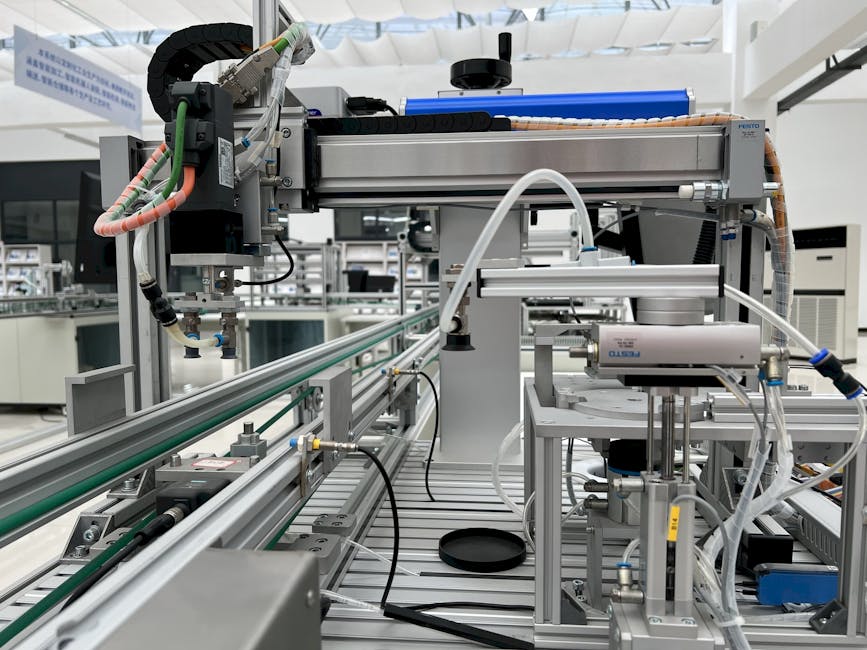
In today’s fast-paced business environment, efficiency is no longer a luxury; it’s a necessity. Process automation technologies can streamline operations, reduce human error, and free up valuable time for your team to focus on strategic initiatives. This article will delve into the various types of process automation, their importance, and how they can give your organization a competitive edge. Whether you are just starting your automation journey or looking to enhance existing systems, understanding these technologies is key to unlocking your business’s full potential.
What Is Process Automation and Its Importance in Modern Business

Process automation refers to the use of technology to automate repetitive tasks and workflows within an organization. By streamlining these processes, businesses can improve efficiency and reduce human error. But why is this important in today’s fast-paced environment?
In essence, process automation technologies allow organizations to focus on what truly matters: growth and innovation. When mundane tasks are handled by automated systems, employees can dedicate their time and energy to more strategic initiatives.
- Increased efficiency
- Cost savings
- Improved accuracy
- Enhanced scalability
Let’s break down the importance of process automation further. First, it significantly boosts productivity. By automating routine tasks, organizations can handle larger volumes of work without the need for additional staff. This is where technologies like Robotic Process Automation (RPA) come into play, allowing for the seamless execution of repetitive tasks.
Moreover, process automation enhances data management. With automated systems, data is collected and processed in real-time, leading to better decision-making. Organizations can analyze trends and performance metrics quickly, enabling them to adapt to market changes swiftly.
| Benefits of Process Automation | Description |
|---|---|
| Efficiency | Reduces time spent on repetitive tasks. |
| Accuracy | Minimizes human error in data entry. |
Another key aspect is how process automation supports better management of workflows. Organizations can design and implement workflows that are optimized for performance. This not only reduces bottlenecks but also enhances collaboration among teams.
Have you ever wondered how much time could be saved by eliminating manual processes? The answer is often staggering. By leveraging process automation technologies, businesses can achieve remarkable efficiency gains, leading to significant cost reductions over time.
- Streamlined communications
- Enhanced compliance
- Better resource allocation
In summary, process automation is not just a trend; it’s a necessity in modern business. As organizations continue to evolve, the integration of automation technologies will play a crucial role in maintaining competitiveness. Embracing these tools allows businesses to optimize their operations and ultimately drive success.

So, are you ready to explore the world of process automation and see how it can transform your business?
Why Is Process Automation So Important?
Process automation technologies are reshaping the way businesses operate. By automating repetitive tasks, organizations can streamline their workflows and enhance efficiency. But why is this so crucial in today’s fast-paced environment?
First, consider the time savings. Automation allows teams to focus on higher-value tasks rather than getting bogged down by mundane processes. This shift not only boosts productivity but also fosters innovation. When employees aren’t tied up with repetitive tasks, they have more time to think creatively.
Additionally, process automation reduces the risk of human error. Manual processes can lead to mistakes, which can be costly. By implementing automation, businesses can ensure that tasks are completed consistently and accurately.
Here are some key benefits of embracing process automation:
- Increased efficiency
- Reduced operational costs
- Improved accuracy
- Enhanced employee satisfaction
The impact of automation extends beyond just saving time. It also plays a significant role in data management. With automated processes, organizations can collect and analyze data more effectively. This leads to better decision-making and strategic planning.
Moreover, automation technologies like Robotic Process Automation (RPA) and Business Process Automation (BPA) are becoming essential tools for businesses. They help in optimizing workflows, allowing for seamless integration of various processes. But how do these technologies actually work?
| Technology | Description |
|---|---|
| Robotic Process Automation (RPA) | Automates rule-based tasks using software robots. |
| Business Process Automation (BPA) | Streamlines complex workflows and processes across departments. |
With the right process automation technologies in place, businesses can improve their operational efficiency and adapt to changing market conditions. This adaptability is vital for survival in a competitive landscape.
So, what’s holding organizations back from fully embracing automation? Often, it’s a lack of understanding or resources. However, the long-term benefits far outweigh the initial investment and learning curve.
Ultimately, process automation is not just a trend; it’s a fundamental shift in how businesses operate. By leveraging these technologies, organizations can not only enhance their efficiency but also position themselves for future success.
In summary, embracing process automation technologies is essential for any business looking to thrive in today’s digital age. It’s time to rethink how we approach our workflows and tasks. Are you ready to take the leap?
How Can Process Automation Give Competitive Advantage?
Process automation technologies are rapidly transforming the way organizations operate. By streamlining workflows and optimizing tasks, businesses can achieve remarkable efficiency. But how exactly does this lead to a competitive advantage?
First, let’s consider the time savings. Automating repetitive processes allows employees to focus on higher-value tasks. This means that instead of spending hours on manual data entry, teams can dedicate their time to strategic planning or customer engagement.
- Increased productivity
- Reduced operational costs
- Enhanced accuracy in data handling
Moreover, process automation improves accuracy. Manual tasks are prone to human error, which can be costly. With automation, data is handled consistently, reducing mistakes and ensuring that decisions are based on reliable information.
Think about how this impacts customer satisfaction. When processes are efficient and accurate, businesses can respond faster to customer needs. This agility can set a company apart from its competitors.
| Benefit | Impact on Business |
|---|---|
| Time Savings | Allows focus on strategic initiatives |
| Increased Accuracy | Reduces costly errors |
| Enhanced Agility | Improves customer response times |
Furthermore, adopting process automation technologies can foster innovation. By freeing up resources, organizations can experiment with new ideas and improve existing processes. This culture of innovation can be a significant differentiator in competitive markets.
Another key advantage is scalability. As businesses grow, so do their processes. Automation allows organizations to scale operations without a proportional increase in overhead costs. This flexibility means that businesses can seize new opportunities quickly.
- Foster innovation
- Enable scalability
- Improve employee morale
Finally, process automation can improve employee morale. When teams are relieved from mundane tasks, they often feel more engaged and satisfied with their work. Happy employees are typically more productive, which ultimately benefits the business.
In conclusion, leveraging process automation technologies provides businesses with a powerful tool to gain a competitive edge. From increased efficiency and accuracy to fostering innovation and enhancing employee satisfaction, the benefits are clear. As organizations continue to evolve, those who embrace automation will likely lead the way in their industries.
Types of Process Automation Explained
Process automation technologies have transformed the way businesses operate. They streamline workflows, reduce human error, and ultimately save time and resources. But what types of process automation are out there? Let’s break them down.
First up, we have Robotic Process Automation (RPA). This technology uses software robots to automate repetitive tasks. Think of it as a digital workforce that can handle mundane activities like data entry or invoice processing. RPA can significantly enhance efficiency in any organization.
Next, there’s Business Process Automation (BPA). While RPA focuses on individual tasks, BPA takes a broader view. It automates entire workflows and processes. BPA is all about improving business efficiency by integrating various tasks into a seamless operation. This means less manual intervention and more strategic focus.
- RPA: Automates repetitive tasks
- BPA: Automates entire workflows
- Focus: Efficiency and integration
Another important technology is Workflow Automation. This type streamlines processes by defining a set sequence of tasks. It ensures that each task is completed in the right order, making it easier to manage complex workflows. Workflow automation is crucial for organizations that juggle multiple projects or teams.
Then we have Data Automation. In today’s data-driven world, automating data collection and analysis is vital. This technology helps organizations gather insights more quickly and accurately. By automating data processes, businesses can make informed decisions faster.
Do you see how each type of automation serves a unique purpose? Understanding these differences is key to leveraging process automation technologies effectively.
| Type of Automation | Description |
|---|---|
| Robotic Process Automation (RPA) | Automates repetitive tasks using software robots. |
| Business Process Automation (BPA) | Automates entire workflows to improve efficiency. |
| Workflow Automation | Defines a sequence of tasks for complex processes. |
| Data Automation | Automates data collection and analysis for insights. |
Finally, we should consider Intelligent Process Automation (IPA). This combines RPA with artificial intelligence (AI) to enhance decision-making. IPA can learn from data patterns, making it adaptable and increasingly efficient over time. It’s a game-changer for organizations looking to innovate.
In summary, the landscape of process automation technologies is diverse. Each type plays a critical role in improving efficiency. By understanding these different forms of automation, businesses can select the right tools to optimize their operations.
Real-World Case Studies: Success Stories of Businesses Using Process Automation



Process automation technologies have transformed the way organizations operate. By automating repetitive tasks, businesses can focus on what truly matters-innovation and customer satisfaction. Let’s explore some real-world case studies that highlight the success of process automation.
One notable example is a leading e-commerce company that implemented robotic process automation (RPA) to streamline its order processing workflows. By automating data entry and inventory management tasks, the organization significantly reduced processing time.
This shift not only improved efficiency but also enhanced data accuracy. With fewer errors to address, the team could spend more time on strategic initiatives rather than on mundane tasks.
- Reduced order processing time by 40%
- Improved data accuracy by 30%
- Freed up 20% of employee time for strategic tasks
Another success story comes from a financial services organization that adopted business process automation (BPA) to manage customer onboarding. The traditional manual process was slow and cumbersome, often leading to customer dissatisfaction.
After implementing automation, the onboarding process was completed in a fraction of the time. Customers now enjoy a seamless experience, and the organization benefits from enhanced customer retention.
| Metric | Before Automation | After Automation |
|---|---|---|
| Onboarding Time | 5 Days | 1 Day |
| Customer Satisfaction | 70% | 90% |
These case studies illustrate the power of process automation technologies in real-world applications. But what about smaller organizations? They, too, can benefit from automation.
A local healthcare provider implemented process automation to manage patient records. By automating data entry and retrieval, the staff could focus more on patient care rather than paperwork. This led to improved patient outcomes and higher staff morale.
- Increased patient interaction time by 25%
- Decreased administrative workload by 35%
- Enhanced overall patient satisfaction ratings
As we can see, process automation is not just for large enterprises. Organizations of all sizes are discovering the benefits of streamlining workflows. With the right technology in place, businesses can optimize their operations, reduce costs, and improve service delivery.
In conclusion, the success stories of these organizations serve as a powerful reminder of the potential of process automation technologies. Whether through RPA or BPA, the impact is clear: automation can drive efficiency and innovation across various sectors.
How to Implement Process Automation Successfully
Implementing process automation technologies can seem daunting, but it doesn’t have to be. With the right approach, organizations can streamline workflows and improve efficiency. Let’s break down the steps to ensure a successful implementation.
First, start by identifying the processes that need automation. Not every task is suitable for automation. Focus on repetitive tasks that consume significant time and resources. These are often the low-hanging fruit that can make a big difference.
- Identify repetitive tasks
- Evaluate the time spent on each task
- Consider the potential for error reduction
Next, it’s essential to assess the tools available for automation. There are various process automation technologies, including Business Process Automation (BPA) and Robotic Process Automation (RPA). Each has its strengths and best-use scenarios.
For example, BPA is great for end-to-end process management, while RPA excels at automating specific tasks within larger workflows. Understanding these tools can help you choose the right solution for your organization’s needs.
| Automation Technology | Best Use Case |
|---|---|
| Business Process Automation (BPA) | End-to-end process management |
| Robotic Process Automation (RPA) | Automating specific tasks |
Once you have your tools selected, it’s time to map out the current workflows. Understanding how tasks flow through your organization will help you identify bottlenecks and areas for improvement.
Consider involving team members who are directly engaged in these processes. Their insights can provide valuable context that might be overlooked otherwise.
- Document current workflows
- Identify pain points in the process
- Engage team members for feedback
After mapping the workflows, it’s time to pilot the automation. Start small-choose one or two processes to automate first. This approach minimizes risk and allows you to learn and adapt your strategy based on real-world results.
Monitor the outcomes closely. Are tasks being completed faster? Is the error rate decreasing? Gathering data here is crucial for refining your approach.
As you analyze the data, adjust your automation strategies accordingly. Continuous improvement is a vital part of successfully implementing process automation technologies.
Finally, don’t forget about training. Ensuring that your team is comfortable with the new automated processes will lead to better adoption and results.
Ask yourself, how can you make this transition smoother for everyone involved? By providing resources and support, you can ease any apprehensions about the change.
In summary, successful implementation of process automation involves careful planning, the right tools, and ongoing support. By following these steps, your organization can reap the benefits of automation, freeing up time and resources for more strategic tasks.
Robotic Process Automation (RPA) vs. Process Automation
Robotic Process Automation (RPA) and process automation are often mentioned in the same breath, yet they serve different purposes in the world of business. Understanding the distinction between the two can help organizations choose the right approach for their automation needs.
At its core, RPA is about using software robots to automate repetitive tasks. These tasks typically involve structured data and rule-based processes. For example, RPA can be used to extract data from invoices and input it into accounting systems. It’s all about efficiency and speed.
On the other hand, process automation encompasses a broader range of activities. It involves automating entire workflows, which may include both manual and automated tasks. This could mean integrating various systems to streamline a business process from start to finish.
- RPA focuses on specific tasks.
- Process automation looks at the entire workflow.
- RPA is typically easier to implement.
When we think about process automation, we often touch on Business Process Automation (BPA). BPA aims to optimize and improve business processes through technology. While RPA can be a part of BPA, BPA also considers the overall management of processes, including how they interact and how data flows between them.
Why does this matter? Because organizations need to ensure that their automation strategies align with their business goals. RPA might be the right choice for quick wins, but for long-term efficiency, process automation could be the key.
| Aspect | RPA | Process Automation |
|---|---|---|
| Scope | Task-specific | Workflow-oriented |
| Implementation Complexity | Lower | Higher |
| Data Handling | Structured Data | Structured & Unstructured Data |
It’s also important to consider the role of data in both RPA and process automation. While RPA can handle structured data efficiently, process automation often requires more sophisticated data management strategies. This is where organizations can leverage advanced analytics and machine learning to enhance their workflows.
In conclusion, both RPA and process automation technologies play vital roles in enhancing business efficiency. Choosing the right one depends on the specific needs of your organization. Are you looking for quick task automation, or do you need a comprehensive solution to streamline entire workflows? The answer will guide your automation strategy.
Business Process Automation (BPA) Overview
Business Process Automation (BPA) is a strategic approach that organizations use to streamline and enhance their operations. By leveraging process automation technologies, companies can improve efficiency, reduce errors, and save time.
At its core, BPA focuses on automating repetitive tasks and workflows that often consume valuable resources. This not only helps in minimizing human error but also allows employees to focus on higher-value activities.
- Increased efficiency
- Cost reduction
- Improved accuracy
- Enhanced compliance
Many organizations are turning to automation to manage their processes more effectively. This shift is often driven by the need to adapt to changing market conditions and customer expectations. But how does BPA work?
Essentially, BPA involves identifying specific processes within a business that can be automated. These processes can range from simple tasks to complex workflows. By analyzing these processes, organizations can pinpoint areas where automation can provide the most benefit.
| Process Type | Automation Benefits |
|---|---|
| Data Entry | Reduces errors and saves time |
| Invoice Processing | Speeds up payment cycles |
| Customer Support | Improves response times |
By implementing BPA, organizations can optimize their workflows and enhance productivity. However, it’s essential to choose the right process automation technologies that align with specific business goals.
One popular method of BPA is Robotic Process Automation (RPA). RPA uses software robots to automate highly repetitive tasks, making it a valuable tool for businesses looking to improve efficiency.
- Streamlines workflows
- Enhances data accuracy
- Facilitates compliance
- Reduces operational costs
As organizations embrace BPA, they often see a significant transformation in how they operate. This transformation can lead to better management of resources and improved service delivery.
In conclusion, Business Process Automation is not just a trend; it’s a necessary evolution for organizations aiming to stay competitive. The right process automation technologies can unlock new levels of efficiency and effectiveness.
Intelligent Process Automation (IPA) and Its Benefits
Intelligent Process Automation (IPA) combines traditional process automation technologies with artificial intelligence (AI) to streamline and enhance business operations. This powerful combination allows organizations to automate complex workflows that were once too intricate for standard automation tools.
So, what exactly are the benefits of IPA? Let’s break it down.
- Increased Efficiency: IPA can significantly reduce the time taken to complete tasks.
- Improved Accuracy: By minimizing human intervention, IPA reduces errors in processes.
- Cost Savings: Automating repetitive tasks can lead to substantial savings in operational costs.
One of the main advantages of IPA is its ability to handle unstructured data. Traditional process automation often struggles with data that isn’t neatly organized. With IPA, organizations can leverage machine learning to analyze and process this data effectively.
Imagine a scenario where customer inquiries come in various formats-emails, chat messages, or social media posts. IPA can intelligently categorize and route these inquiries, ensuring that they are addressed promptly and effectively.
| Benefit | Description |
|---|---|
| Scalability | Easily scale operations without proportional increases in cost. |
| Enhanced Decision-Making | AI provides insights that help in making informed decisions. |
Furthermore, IPA supports continuous improvement in business processes. By analyzing performance data, organizations can identify bottlenecks and inefficiencies. This leads to an ongoing cycle of refinement and enhancement.
In contrast to traditional business process automation (BPA), which focuses on optimizing existing workflows, IPA empowers organizations to innovate. It allows for the redesign of processes that can adapt to changing market demands.
- Flexibility: IPA can adapt to various scenarios and requirements.
- Employee Empowerment: By automating mundane tasks, employees can focus on more strategic initiatives.
- Integration: IPA tools can easily integrate with existing systems, enhancing their capabilities.
In summary, Intelligent Process Automation offers a transformative approach to managing business processes. By harnessing the power of automation and AI, organizations can not only improve efficiency but also foster innovation.
Isn’t it time for your organization to explore the potential of IPA?
In conclusion, the integration of process automation technologies into business operations is not merely a trend but a fundamental shift towards efficiency, accuracy, and innovation. As organizations continue to navigate the complexities of the modern marketplace, the ability to streamline processes and reduce manual intervention becomes increasingly critical. The advantages of adopting these technologies are vast, from enhancing productivity and reducing operational costs to improving customer satisfaction and enabling better decision-making through real-time data analysis.
Moreover, the landscape of process automation is continually evolving, driven by advancements in artificial intelligence, machine learning, and robotics. These developments not only enhance the capabilities of existing automation tools but also pave the way for new applications that can address specific industry challenges. As businesses assess their unique needs, the right combination of automation technologies can lead to significant competitive advantages, allowing them to respond swiftly to market changes and customer demands.
It is essential for organizations to approach process automation with a strategic mindset. This involves not only selecting the right technologies but also fostering a culture of continuous improvement and adaptability. Employees should be engaged and trained to work alongside automation tools, ensuring a harmonious balance between human expertise and technological efficiency. Ultimately, the successful implementation of process automation technologies can lead to transformative results, paving the way for sustainable growth and innovation.
As we look to the future, the potential of process automation technologies is limited only by our imagination. Companies that embrace this evolution will not only enhance their operational capabilities but also redefine their business models, positioning themselves as leaders in their respective industries. By recognizing the importance of process automation today, organizations can lay the groundwork for a more agile, resilient, and prosperous tomorrow. The journey towards full automation may be gradual, but the rewards it offers are undeniable, making it an essential component of any forward-thinking business strategy.
Leave a Reply