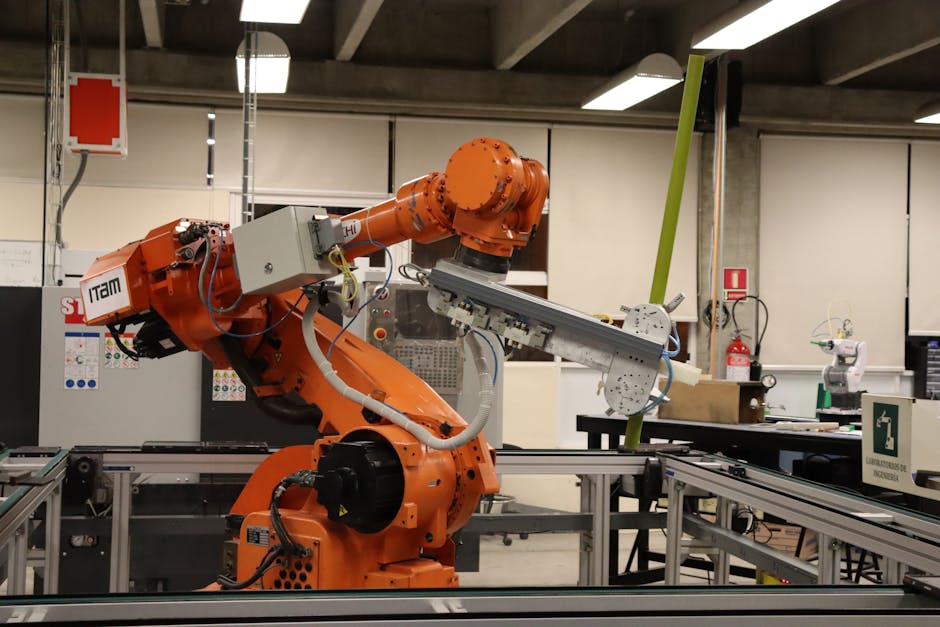
In an era where efficiency is paramount, AI automation emerges as a game-changer, streamlining tasks and enhancing productivity across various industries. Imagine freeing your team from repetitive chores, allowing them to focus on strategic initiatives that drive innovation and growth. This article will delve into the essence of AI automation, exploring its mechanisms, benefits, and real-world applications that can elevate your business to new heights. Whether you’re a seasoned professional or just starting to explore automation, understanding AI’s role will empower you to harness its full potential. Prepare to unlock a future where technology and human ingenuity work hand in hand for unparalleled success.
What is AI Automation and How Does It Work?
 automation applications infographic”
loading=”lazy”
style=”max-width:720px;width:100%;height:auto;border-radius:12px;margin:20px 0;”>
AI automation refers to the use of artificial intelligence technologies to perform tasks that typically require human intervention. This can range from simple data entry to complex decision-making processes. The goal is to streamline operations, improve efficiency, and reduce the time spent on repetitive tasks.
At its core, AI automation leverages machine learning and natural language processing to analyze data and execute tasks. These systems can learn from data patterns, making them increasingly effective over time. But how does this actually work?
- Data Analysis: AI systems analyze large datasets to identify trends and insights.
- Task Execution: Once the data is processed, the system can execute tasks based on predefined rules.
- Continuous Learning: AI automation tools improve their performance through machine learning.
AI automation tools can be integrated into various business systems. For example, customer service chatbots can handle inquiries, allowing human agents to focus on more complex issues. This not only saves time but also enhances the customer experience.
Imagine a world where mundane tasks are handled by AI, freeing up time for creative and strategic endeavors. It’s not just a dream; it’s becoming a reality for many businesses today.
| AI Automation Applications | Benefits |
|---|---|
| Customer Support | 24/7 availability |
| Data Entry | Reduced errors |
| Marketing Automation | Targeted campaigns |
As AI automation continues to evolve, its potential applications are vast. From healthcare to finance, industries are finding new ways to utilize these systems. But with great power comes responsibility. Businesses must ensure that they implement AI ethically and transparently.

In summary, AI automation simplifies complex processes, allowing businesses to operate more efficiently. By understanding how it works, organizations can harness its power to transform their operations.
The Benefits of Implementing AI Automation in Business
In today’s fast-paced business landscape, AI automation is becoming a game-changer. Companies are increasingly turning to automation tools to streamline operations and enhance efficiency. But what exactly are the benefits of integrating AI automation into your business?
First and foremost, AI automation helps reduce repetitive tasks. By automating mundane processes, businesses can allocate their human resources to more strategic activities. This not only improves productivity but also boosts employee morale.
Imagine a scenario where your team spends hours on data entry. With AI automation, these tasks can be completed in a fraction of the time, allowing your staff to focus on more creative and impactful work.
- Increased efficiency
- Reduced operational costs
- Enhanced data accuracy
Another significant advantage of AI automation is its ability to analyze vast amounts of data. Businesses generate enormous volumes of data daily, and processing this information manually can be overwhelming. AI systems can quickly sift through data to identify trends and insights, enabling informed decision-making.
Moreover, automation tools can provide real-time analytics. This means that businesses can respond to market changes promptly, ensuring they stay ahead of the competition. Isn’t that a compelling reason to consider AI automation?
| Benefit | Description |
|---|---|
| Cost Reduction | Lower operational costs through reduced labor and increased efficiency. |
| Scalability | Easily scale operations without proportionally increasing costs. |
AI automation also enhances customer experiences. By utilizing chatbots and automated communication systems, businesses can provide 24/7 support. This ensures that customer inquiries are addressed promptly, leading to higher satisfaction rates.
Think about it: customers today expect instant responses. With AI tools, companies can meet these expectations without overwhelming their staff.
- Improved customer service
- Faster response times
- Personalized interactions
Furthermore, implementing AI automation can lead to better compliance and risk management. Automated systems can monitor and ensure that business processes adhere to regulations. This minimizes the risk of human error and potential legal issues.

In conclusion, the benefits of AI automation in business are vast and varied. From increased efficiency and cost reduction to enhanced customer experiences and compliance, the advantages are clear. Is your business ready to embrace the future of automation?
Top AI Automation Tools for Enhanced Efficiency
In today’s fast-paced business landscape, AI automation is becoming essential for enhancing efficiency. These tools can streamline processes, freeing up valuable time for teams to focus on more strategic tasks. But which tools should you consider?
Here are some of the top AI automation tools that can transform your workflows:
- Zapier: This tool connects your favorite apps, allowing for seamless automation of tasks across platforms.
- Integromat (Make): Known for its visual interface, Integromat helps in automating complex workflows without needing extensive coding knowledge.
- UiPath: A leader in robotic process automation (RPA), UiPath helps businesses automate repetitive tasks with ease.
Each of these tools leverages AI automation to handle data processing and task management efficiently. They can help businesses save time and reduce human error, which is crucial in today’s competitive environment.
Have you ever thought about how much time your team spends on repetitive tasks? By implementing these tools, you can significantly cut down on that time, allowing your team to focus on more critical areas.
| Tool | Key Features |
|---|---|
| Zapier | App integrations, multi-step workflows, user-friendly interface |
| Integromat | Visual automation, scenario building, powerful data handling |
| UiPath | RPA, scalable automation, extensive community support |
Implementing AI automation tools can also enhance data accuracy. By reducing manual input, the chances of errors diminish. This is particularly beneficial for businesses that rely heavily on data-driven decisions.
Moreover, these tools can adapt to your specific needs. Whether you’re a small business or a large enterprise, there’s an AI automation solution tailored for you. It’s about finding the right fit for your unique processes.
- Monday.com: A versatile project management tool that integrates AI to automate task assignments and updates.
- Salesforce Einstein: An AI layer for Salesforce that helps in automating sales processes and analyzing customer data.
- ChatGPT: This tool can automate customer interactions, providing instant responses and support.

AI automation not only saves time but also enhances productivity across various business functions. By integrating these tools, you can create a more efficient workflow that allows your team to thrive.
So, are you ready to embrace AI automation? The right tools can make all the difference in how you manage tasks and processes. Start exploring today!
How AI Automation is Transforming Various Industries
AI automation is reshaping the landscape of numerous industries, streamlining operations and enhancing productivity. From manufacturing to healthcare, businesses are discovering innovative ways to leverage AI tools for better efficiency.
One of the most significant impacts of AI automation is in the realm of data processing. Businesses can now analyze vast amounts of data in real-time, allowing for quicker decision-making. But how does this transformation actually take place?
- Manufacturing: Predictive maintenance and quality control
- Healthcare: Patient monitoring and diagnosis assistance
- Finance: Fraud detection and risk assessment
- Retail: Inventory management and personalized marketing
In manufacturing, AI automation tools help predict when machines might fail, reducing downtime significantly. This predictive maintenance not only saves time but also cuts costs, proving to be a game changer for many businesses.
Similarly, in the healthcare sector, AI systems are being used to assist in diagnosing diseases by processing patient data. These systems can analyze symptoms and suggest possible conditions, helping healthcare professionals make informed decisions faster.
| Industry | AI Automation Application |
|---|---|
| Manufacturing | Predictive maintenance |
| Healthcare | Diagnosis assistance |
| Finance | Fraud detection |
| Retail | Inventory management |
In finance, AI automation tools are crucial for detecting fraudulent activities. These systems analyze transaction patterns and flag any anomalies that might indicate fraud, significantly reducing the risk for businesses.

Retailers are also benefiting from AI automation. By analyzing customer data, AI can help personalize marketing strategies, ensuring that the right content reaches the right audience at the right time. Isn’t it fascinating how data can drive such targeted efforts?
- Efficiency: Reduces manual tasks
- Accuracy: Minimizes human error
- Scalability: Adapts to growing data
As we look at the broader picture, it’s clear that AI automation is not just a trend; it’s a fundamental shift in how businesses operate. By automating repetitive tasks, companies can focus on strategic initiatives that drive growth.
In conclusion, the transformative power of AI automation across various industries is undeniable. As more businesses adopt these technologies, the potential for innovation and efficiency will only continue to grow. Are you ready to embrace this change?
AI Automation vs Traditional Automation: Key Differences
When we talk about automation, it’s crucial to understand the distinction between traditional automation and AI automation. Both aim to streamline processes, but they do so in fundamentally different ways.
Traditional automation typically relies on pre-defined rules and scripts. It’s great for repetitive tasks that don’t change often. For example, if you need to process invoices, traditional systems can handle this efficiently.
- Consistent performance for routine tasks
- Lower initial setup costs
- Requires significant manual intervention for changes
On the other hand, AI automation incorporates advanced technologies like machine learning and natural language processing. This means it can learn from data and adapt to new situations over time. Imagine a system that can not only process invoices but also identify anomalies and suggest improvements.
One of the key differences lies in how these systems handle data. Traditional automation processes data based on static rules, while AI automation can analyze vast amounts of data to derive insights. This leads to smarter decision-making.
| Feature | Traditional Automation | AI Automation |
|---|---|---|
| Flexibility | Low | High |
| Data Handling | Static | Dynamic |
| Learning Capability | None | Yes |
Another aspect to consider is the time investment. Traditional automation can often be quicker to implement for simple tasks. But as complexity grows, the time spent on maintaining these systems can increase significantly.
AI automation, while potentially requiring a more substantial initial investment, can save time in the long run. It continuously evolves and improves, meaning your business can stay ahead in a rapidly changing environment.
- Quick implementation for simple tasks
- Long-term savings with AI adaptability
- Ongoing maintenance can be time-consuming
In summary, while both traditional and AI automation have their place in the business landscape, understanding their differences can help you make more informed decisions. Are you ready to embrace AI automation for your tasks?
Ultimately, the choice between these two systems should align with your business goals. If you seek efficiency and adaptability, AI automation may be the way to go. However, for straightforward, repetitive tasks, traditional automation might still be the best fit.
The Role of AI in Test Automation Explained
AI automation is revolutionizing the way businesses approach test automation. By integrating AI into testing processes, companies can enhance efficiency and accuracy. But how exactly does this work?
At its core, AI automation leverages machine learning algorithms to analyze data and make decisions. This means that instead of relying solely on human input, automated systems can learn from past test results to improve future testing tasks.
- Increased efficiency in testing tasks
- Reduced time spent on repetitive processes
- Improved accuracy in identifying defects
One of the most significant advantages of AI in test automation is its ability to process large volumes of data quickly. Traditional testing methods often struggle with extensive datasets, but AI systems excel in these scenarios. They can sift through information, identify patterns, and even predict potential issues before they arise.
Moreover, AI automation tools can adapt to changes in the software environment. As new features are added or existing ones are modified, these intelligent systems can adjust their testing strategies accordingly. This adaptability is crucial for businesses aiming to maintain high-quality standards in fast-paced environments.
| Traditional Testing | AI Automation |
|---|---|
| Manual test case execution | Automated execution with learning |
| Limited scalability | Highly scalable solutions |
But let’s not forget about the human element. While AI automation can significantly enhance testing processes, human oversight is still essential. Test engineers play a vital role in interpreting results and providing context that AI may not fully grasp.
As we explore further, it’s clear that the integration of AI into test automation isn’t just a trend; it’s becoming a necessity for businesses that want to stay competitive. With the right tools and strategies, companies can leverage AI to streamline their testing processes and deliver better products.
- Enhanced decision-making capabilities
- Reduction in manual errors
- Faster feedback loops for development teams
In conclusion, AI automation is transforming test automation by making it faster, smarter, and more efficient. By embracing these technologies, businesses can not only improve their testing outcomes but also focus more on innovation. After all, isn’t that what every business strives for?
How to Choose the Right AI Automation Tool
Choosing the right AI automation tool can feel overwhelming. With so many options available, how do you know which one is best for your business needs?
First, consider the specific tasks you want to automate. Different tools excel at different types of automation, whether it’s data processing, content generation, or language translation. Take a moment to outline the key tasks that consume your time.
- Identify repetitive tasks
- Assess data management needs
- Evaluate content creation requirements
Next, think about the integration capabilities of the AI automation systems you’re considering. Do they work seamlessly with your existing tools? Compatibility can save you a lot of time and effort during setup.
You should also consider the user interface. A tool that’s intuitive can make a significant difference in how quickly your team adapts to it. After all, if it’s too complicated, it may end up collecting dust.
| Feature | Importance |
|---|---|
| Integration with existing tools | High |
| Ease of use | Medium |
| Scalability | High |
Another crucial factor is scalability. As your business grows, your automation needs may change. Opt for a tool that can evolve with you.
Don’t forget to assess the support and resources available for the automation tool. A strong support system can help you troubleshoot issues and maximize the tool’s potential.
- Check for user reviews
- Look for community forums
- Evaluate customer support options
Lastly, consider your budget. AI automation tools come with various pricing models. Some may charge per user, while others may have a flat fee. Determine what fits your financial plan while still meeting your needs.
In conclusion, choosing the right AI automation tool involves careful consideration of your tasks, integration, ease of use, scalability, support, and budget. Take your time to evaluate your options, and you’ll find the tool that empowers your business to save time and enhance productivity.
AI Automation for Customer Support: Best Practices
In today’s fast-paced digital world, AI automation has become a game-changer for customer support. By leveraging intelligent systems, businesses can streamline operations, reduce response times, and enhance customer satisfaction. But how do you implement it effectively?
First, it’s essential to identify the specific tasks that can benefit from automation. Consider repetitive inquiries or data processing tasks. These are often time-consuming and can be efficiently handled by AI tools.
- Identify high-volume inquiries.
- Focus on data collection and processing.
- Automate routine tasks to free up human agents.
Next, choose the right tools. There are numerous AI automation platforms available, each with unique features tailored to different business needs. Look for systems that offer natural language processing capabilities to enhance communication.
Integrating these tools into your existing support framework can be daunting. However, with a clear strategy, you can ensure a smooth transition. Start small; perhaps automate a single channel, like chat support, before expanding to other areas.
| AI Tool | Key Feature |
|---|---|
| Zendesk | Omnichannel support |
| Intercom | Automated messaging |
Once your automation systems are in place, it’s crucial to monitor their performance. Regularly analyze data to understand how well your AI tools are handling inquiries. Are they resolving issues effectively? Are customers satisfied with the responses?
Feedback is invaluable. Use customer insights to refine your AI automation processes. This will not only improve efficiency but also enhance the overall customer experience.
- Monitor performance metrics.
- Gather customer feedback regularly.
- Iterate on processes based on insights.
Lastly, don’t forget the human touch. While AI can handle many tasks, there will always be situations that require empathy and understanding. Ensure your human agents are available for complex inquiries that AI might struggle with.
In conclusion, implementing AI automation in customer support can significantly enhance efficiency and customer satisfaction. By choosing the right tools, monitoring performance, and maintaining a balance between automation and human interaction, your business can thrive in this evolving landscape.
AI Automation for Marketing: Strategies and Tools
AI automation is transforming the way businesses approach marketing. With the ability to streamline tasks and enhance decision-making, it’s no wonder that many are turning to AI tools. But how exactly can businesses leverage these systems effectively?
First, consider the repetitive tasks that consume valuable time. Tasks like data entry, email responses, and social media posting can be automated with AI solutions. This not only saves time but also reduces human error.
- Email marketing campaigns
- Social media scheduling
- Customer support inquiries
AI automation tools can analyze large datasets quickly. This means businesses can gain insights into customer behavior and preferences in real-time. Imagine knowing what your customers want before they even ask for it!
When it comes to content creation, AI systems can assist in generating ideas or even drafting posts. While these tools can’t replace human creativity, they can be invaluable when brainstorming or optimizing content for search engines.
Here are a few popular AI automation tools for marketing:
| Tool | Purpose |
|---|---|
| HubSpot | CRM and marketing automation |
| Hootsuite | Social media management |
| Mailchimp | Email marketing automation |
Integrating AI automation into your marketing strategy can lead to more personalized customer experiences. By analyzing user data, these tools can help tailor content to fit individual preferences.
But, how do you choose the right tools? Start by identifying your business’s specific needs. Are you looking to improve customer engagement, streamline communications, or enhance your content strategy?
Once you’ve pinpointed your goals, research tools that align with those objectives. Many platforms offer free trials, allowing you to test their capabilities before committing.
Moreover, consider the scalability of the tools. As your business grows, your automation needs will evolve. Choose systems that can adapt alongside your business.
In summary, AI automation is not just a trend; it’s a strategic advantage. By embracing these tools, businesses can optimize their marketing efforts, save time, and ultimately drive better results. So, why not start exploring AI automation today?
AI Automation in Healthcare: Improving Patient Outcomes
AI automation is transforming the healthcare landscape, enhancing patient outcomes in ways we couldn’t have imagined a few years ago. By leveraging advanced algorithms and data processing capabilities, healthcare providers can streamline tasks that typically consume valuable time and resources.
One of the key benefits of AI automation is its ability to analyze vast amounts of data quickly. This means that healthcare professionals can make informed decisions faster, ultimately leading to better patient care.
- Enhanced diagnostic accuracy
- Reduced administrative burden
- Improved patient monitoring
Imagine a system that can predict potential health issues before they arise. AI automation tools can sift through patient data, flagging anomalies and suggesting proactive measures. This kind of predictive analytics is invaluable in preventing complications and ensuring timely interventions.
Moreover, automation helps in managing routine tasks, allowing healthcare professionals to focus on what truly matters-patient interaction and care. For instance, scheduling appointments or processing insurance claims can be automated, freeing up time for healthcare workers.
| Task | AI Automation Benefit |
|---|---|
| Appointment Scheduling | Saves time and reduces errors |
| Patient Monitoring | Real-time insights for better care |
Another exciting aspect of AI automation is its capability to enhance communication. Natural language processing systems can help in translating complex medical jargon into understandable content for patients. This ensures that patients are more engaged and informed about their health.
With these advancements, healthcare providers can build stronger relationships with their patients. But how can businesses in healthcare effectively implement these AI automation systems?
- Invest in the right technology
- Train staff on new tools
- Continuously evaluate performance
In conclusion, AI automation is not just a trend; it’s a powerful tool that can lead to significant improvements in patient outcomes. By embracing these technologies, healthcare providers can enhance efficiency, accuracy, and ultimately, the quality of care they deliver.
As we navigate the evolving landscape of technology, the role of AI automation continues to expand, offering businesses unprecedented opportunities to streamline operations, enhance productivity, and drive innovation. By integrating AI automation into various sectors, organizations can not only reduce operational costs but also free up valuable human resources to focus on more strategic initiatives. This shift towards automation is not merely a trend; it represents a fundamental change in how businesses operate and compete in an increasingly digital world.
The potential applications of AI automation are vast, ranging from customer service chatbots that provide instant support to complex data analysis tools that help organizations make informed decisions. As these technologies become more sophisticated, they are transforming traditional workflows and enabling companies to respond to market demands with agility and precision. Moreover, the integration of AI automation can lead to improved accuracy and consistency in tasks that require a high degree of precision, further enhancing overall operational efficiency.
However, the journey towards successful AI automation is not without its challenges. Organizations must carefully consider the ethical implications of AI deployment, ensuring that automation is implemented in a manner that is transparent and equitable. Additionally, investing in employee training and development is crucial to ensure that the workforce is equipped to collaborate effectively with AI systems. By fostering a culture of innovation and adaptability, businesses can harness the full potential of AI automation while minimizing disruption.
In conclusion, embracing AI automation is no longer a choice but a necessity for organizations aiming to thrive in the modern economy. As we look to the future, those who prioritize the integration of AI technologies will not only enhance their operational capabilities but also position themselves as leaders in their respective industries. The key lies in understanding that AI automation is a powerful tool that, when used thoughtfully, can drive significant value and create a more efficient, effective, and innovative business environment. The time to act is now; the future of work is here, and AI automation is at its forefront.
Leave a Reply