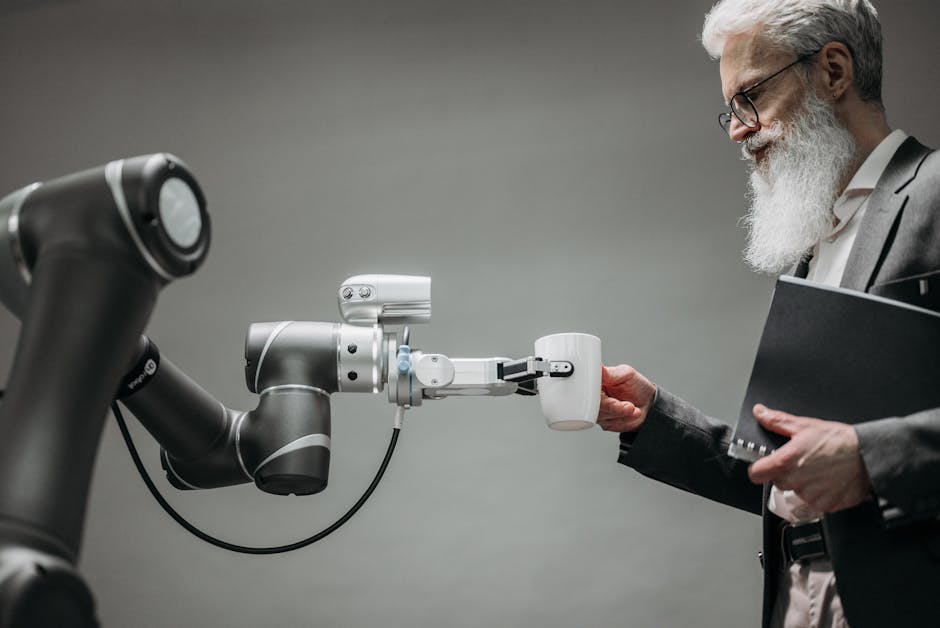
As artificial intelligence continues to evolve, many are left wondering: what jobs will AI replace? The rapid advancement of technology raises questions about job security and the future of work. In this article, we will explore the roles most susceptible to automation, analyze the sectors at risk, and highlight the jobs that are likely to thrive in an AI-driven landscape. Understanding these trends will not only help you navigate your career path but also empower you to adapt and thrive amidst the changes. Prepare to uncover the future of work and what it means for you.
The 20 Jobs Most Likely to be Replaced by AI
The rise of artificial intelligence (AI) is reshaping the workforce in ways we never imagined. As automation becomes more prevalent, certain roles are at a higher risk of being replaced. But which jobs are most likely to be impacted?
Let’s explore some of the roles that are on the chopping block due to advancements in AI.
- Data Entry Clerks
- Telemarketers
- Retail Cashiers
- Manufacturing Workers
- Customer Service Representatives
Many of these jobs involve repetitive tasks that AI can perform more efficiently. For instance, data entry clerks often handle vast amounts of information that can be easily processed by software. Similarly, telemarketers are facing competition from AI systems that can conduct calls and analyze customer responses.
It’s not just low-skill jobs at risk; even some professional roles are being transformed.
| Job Role | Reason for Replacement |
|---|---|
| Accountants | Automation of calculations and audits |
| Paralegals | Document review and legal research |
Accountants and paralegals, for example, perform tasks that can be streamlined through AI tools. These tools can analyze data and documents faster than human workers, making them more efficient.
So, what other jobs are facing the threat of automation?
- Warehouse Workers
- Transportation and Delivery Drivers
- Market Research Analysts
- Fast Food Workers
- Financial Analysts
Warehouse workers and delivery drivers are particularly vulnerable due to the rise of robotics and self-driving technology. These advancements allow companies to reduce costs and improve efficiency, making it harder for human workers to compete.
It’s important to remember that while AI can replace certain jobs, it also creates new opportunities.
| Emerging Job Role | Description |
|---|---|
| AI Ethicist | Ensuring ethical AI use |
| Data Scientists | Analyzing data generated by AI |
As we navigate this transition, understanding which jobs will be replaced by AI is crucial. It allows workers to adapt and seek out new roles that complement the technology rather than compete against it.
The future of work is changing, and staying informed is the best way to prepare.
What Jobs Will AI Replace First?
As artificial intelligence continues to evolve, many are left wondering which jobs will be affected first. The truth is, AI is already reshaping the workforce in notable ways. While some roles may be enhanced by automation, others may face potential replacement.
In sectors like manufacturing, the impact of AI is already evident. Automated machines are taking over repetitive physical tasks, leading to increased efficiency and reduced costs. But what does this mean for human workers?
- Manufacturing jobs are increasingly being automated.
- Data entry roles are at high risk of replacement.
- Customer service positions are evolving with AI chatbots.
Data entry jobs, which require minimal human interaction, are also prime candidates for replacement. AI can process and input information much faster than a human worker. This shift raises questions about job security for those in these roles.
Customer service is another area experiencing significant transformation. Many companies are now employing AI chatbots to handle basic inquiries. This not only cuts costs but also improves response times. However, it does leave some workers concerned about their future.
| Job Role | AI Impact |
|---|---|
| Manufacturing | High automation risk |
| Data Entry | High replacement risk |
| Customer Service | Moderate automation risk |
Interestingly, roles that require emotional intelligence or complex decision-making are less likely to be replaced. Jobs in healthcare, creative industries, and management still rely heavily on human interaction. So, what does this mean for the future of work?
As AI continues to advance, workers may need to adapt by developing new skills. Upskilling and reskilling will be key in transitioning to roles that AI cannot easily replace. It’s not just about what jobs will AI replace; it’s also about how we can prepare for the changes ahead.
- Focus on developing emotional intelligence.
- Learn new technical skills relevant to emerging technologies.
- Embrace lifelong learning to stay competitive.
The impact of AI on jobs is profound, but it also presents opportunities. By understanding which roles are most vulnerable, workers can make informed decisions about their careers. In a landscape where automation is gaining ground, adaptability will be the key to success.
Ultimately, the question isn’t just about what jobs will AI replace first, but how we can navigate this transition together. The future of work may look different, but with the right approach, it can be a positive change for all.
Will AI Replace All White-Collar Jobs?
The rise of artificial intelligence (AI) has sparked a lot of debate about its impact on the workforce. One of the most pressing questions is: will AI replace all white-collar jobs? While it’s clear that automation is reshaping many roles, the answer isn’t as straightforward as it might seem.
AI technologies are already being integrated into various sectors. From finance to healthcare, many tasks traditionally performed by human workers are now being automated. However, this doesn’t mean that all white-collar jobs are at risk of disappearing.
- Data analysis and reporting
- Customer service interactions
- Project management tasks
Some roles are more susceptible to automation than others. For instance, jobs that involve routine tasks, like data entry or basic customer service inquiries, are prime candidates for AI replacement. However, roles requiring critical thinking, creativity, and emotional intelligence are likely to remain secure.
Many experts suggest that rather than outright replacement, AI will transform the nature of work. Workers will need to adapt to new technologies and focus on tasks that require uniquely human skills.
| Job Type | Automation Risk |
|---|---|
| Data Entry | High |
| Project Management | Low |
| Creative Roles | Very Low |
Additionally, AI can augment human capabilities, allowing workers to focus on higher-level tasks. For example, in customer service, AI can handle simple inquiries, freeing up human agents to tackle more complex issues that require empathy and nuanced understanding.
This shift could lead to new job opportunities that we can’t even envision today. As AI continues to evolve, so too will the roles available in the workforce. The key is to remain adaptable and open to change.
- Upskilling and reskilling will be essential.
- Collaboration between humans and AI could become the norm.
- New roles will emerge in AI management and oversight.
In conclusion, while AI will undoubtedly change the landscape of white-collar work, it won’t necessarily replace all jobs. Instead, it will redefine roles and create opportunities for those willing to adapt. The future of work is likely to be a blend of human intelligence and machine efficiency.
Tier 1: Immediate High Risk Jobs
The rise of artificial intelligence (AI) is reshaping the job landscape in profound ways. Certain roles are particularly vulnerable to automation, leading many to wonder: what jobs will AI replace first?
With technology advancing rapidly, some positions are at a higher risk than others. These immediate high-risk jobs often involve repetitive tasks that AI can perform more efficiently. Let’s explore some of these roles and the implications for workers.
- Manufacturing and assembly line jobs
- Data entry positions
- Customer service roles
- Retail cashiers
- Transportation and delivery services
Many manufacturing and assembly line jobs are already being transformed by robotics. These machines can now assemble products faster and with fewer errors than human workers. This shift raises a crucial question: how will displaced workers transition to new roles?
In customer service, chatbots and virtual assistants are increasingly handling inquiries that once required a human touch. While these technologies can enhance efficiency, they also threaten the job security of customer service representatives.
| Job Role | Risk Level |
|---|---|
| Manufacturing | High |
| Data Entry | High |
| Customer Service | Medium |
The transportation sector is also feeling the impact of AI. With the development of self-driving vehicles, jobs related to driving-such as delivery services-are at risk. As companies invest in this technology, the demand for human drivers may decrease significantly.
It’s important to recognize that while some jobs will be replaced, others will evolve. The need for human oversight, maintenance, and advanced skills will still exist.
- Healthcare support roles
- Warehouse workers
- Food service positions
- Administrative assistants
In healthcare, for instance, AI can assist with diagnostics and data analysis, but the human element remains crucial. Workers in these fields will need to adapt and learn how to work alongside AI technologies.
As we look ahead, it’s clear that automation will continue to shape the job market. While some roles may disappear, new opportunities will arise, emphasizing the importance of adaptability in the workforce.
So, what steps can workers take to prepare for this shifting landscape? Continuous learning and skill development will be essential to stay relevant in an increasingly automated world.
Tier 2: Near-Term Risk Jobs
As we look at the evolving landscape of employment, it’s clear that certain jobs are more vulnerable to automation than others. The rise of artificial intelligence (AI) is reshaping the way we think about work. So, what jobs will AI replace in the near term?
Many roles that involve repetitive tasks are at a higher risk. This includes positions in manufacturing, data entry, and basic customer service. These jobs often require minimal human interaction and can be easily automated.
- Manufacturing jobs
- Data entry roles
- Basic customer service positions
The automation of these jobs can lead to significant cost savings for companies. However, it raises questions about the future of workers in these sectors. As machines take over, what happens to the people who once filled these roles?
Interestingly, not all physical jobs are equally at risk. While some manual tasks can be automated, others that require complex decision-making or emotional intelligence may remain safe for now.
| Job Type | Risk Level |
|---|---|
| Manufacturing | High |
| Data Entry | High |
| Customer Service | Medium |
The shift toward automation can also impact the quality of customer service. AI can handle basic inquiries efficiently, but can it truly understand and address the needs of customers? Human interaction often provides a level of empathy and understanding that machines struggle to replicate.
As we consider these changes, it’s important to recognize that not all roles will disappear. Many workers will need to adapt and upskill to remain relevant in a tech-driven world.
- Upskilling opportunities
- Resilience in the workforce
- Emerging job markets
In summary, while AI poses a risk to certain jobs, it also opens doors to new roles that require human creativity and critical thinking. The challenge lies in navigating this transition. As we move forward, how can we prepare our workforce to thrive alongside automation?
The future of work is here, and it’s essential for workers to stay informed about these trends. By understanding which jobs are at risk, we can better strategize for a successful career in an AI-enhanced world.
Tier 3: Medium-Term Risk Jobs
The rise of artificial intelligence (AI) is reshaping the job landscape. While some roles are at immediate risk, others fall into a medium-term category. These jobs may not vanish overnight, but they are increasingly vulnerable to automation.
Understanding which jobs may be affected can help workers prepare for the future. So, what jobs will AI replace in the medium term? Let’s explore some roles that might be on the chopping block.
Many customer service positions are being transformed by AI. Chatbots and virtual assistants are capable of handling a range of inquiries, from simple questions to more complex issues. As these technologies improve, the need for human customer service representatives may decline.
Consider these roles affected by AI:
- Call center operators
- Customer support agents
- Technical support specialists
In addition to customer service, jobs in the retail sector are also at risk. Self-checkout systems and automated inventory management are becoming more common. These changes can reduce the need for physical workers on the sales floor.
So, what does this mean for those in retail?
It suggests that workers may need to adapt to new roles that cannot be easily automated. For instance, positions that require emotional intelligence or complex problem-solving are less likely to be replaced.
Here’s a quick look at some retail roles and their potential risks:
| Retail Role | Medium-Term Risk Level |
|---|---|
| Cashiers | High |
| Sales Associates | Medium |
As we dive deeper into the impact of AI, we see that jobs requiring physical presence might also face challenges. For example, manual labor roles in warehouses are increasingly being supported by robotics. This shift can lead to a reduced demand for human workers in these settings.
But what about the jobs that require a blend of physical and cognitive skills?
These positions may evolve rather than disappear. Workers might find themselves collaborating with AI tools to enhance their productivity.
Some roles to keep an eye on include:
- Warehouse workers
- Manufacturing assembly line jobs
- Delivery drivers
In conclusion, while certain jobs face a medium-term risk of replacement by AI, others may transform. The key for workers is to stay informed and adaptable. Embracing lifelong learning will be crucial in navigating this changing job landscape.
As AI continues to advance, understanding what jobs will be impacted can empower workers to take proactive steps in shaping their careers.
The Safe Jobs: Built on Trust and Regulation
As we navigate the evolving landscape of work, it’s essential to identify which jobs are likely to remain resilient in the face of automation. While many roles are at risk, some jobs are built on trust and regulation, making them less susceptible to replacement by AI.
Jobs that require a human touch, such as healthcare professionals, social workers, and educators, are unlikely to be fully automated. These roles involve complex interpersonal interactions that AI simply cannot replicate.
- Healthcare professionals
- Social workers
- Educators
Additionally, jobs in regulatory compliance and law are also considered safe. These roles require an understanding of human behavior and ethical considerations, which are challenging for AI to grasp. Think about the importance of human judgment in these contexts.
In the financial sector, roles that involve advising customers, such as financial planners, require building trust and understanding individual needs. While AI can analyze data, it lacks the empathy and nuanced understanding that human workers bring to the table.
| Job Role | Reason for Safety |
|---|---|
| Healthcare Professionals | Requires empathy and complex patient interactions |
| Social Workers | Involves understanding human emotions and crises |
| Financial Planners | Builds trust through personalized advice |
Moreover, jobs that require physical presence in environments like construction, maintenance, and certain service roles are also less likely to be replaced. These jobs often involve unpredictable conditions and hands-on tasks that AI cannot easily manage.
As we consider the future of work, it’s essential to recognize the value of roles that are inherently human. They not only provide job security but also contribute to society in meaningful ways. So, what does this mean for the workforce of tomorrow?
- Physical presence in work environments
- Hands-on tasks that require adaptability
- Roles that foster community and human connection
In conclusion, while automation continues to advance, certain jobs will remain safe due to their reliance on human skills, trust, and regulatory frameworks. By focusing on these areas, workers can better prepare for a future where AI complements rather than replaces human roles.
Ultimately, the key to thriving in this new landscape lies in embracing the uniquely human qualities that machines cannot replicate. As we move forward, let’s celebrate the jobs that will continue to rely on our shared humanity.
The At-Risk Jobs: Knowledge Work Without Physical Anchors
As we dive deeper into the impact of AI on the job market, it’s important to identify the roles most vulnerable to automation. Knowledge work, especially jobs that lack a strong physical presence, are increasingly at risk. But why is this the case?
Automation excels at tasks that can be clearly defined and repeated. Jobs that rely heavily on data analysis, information processing, and routine decision-making are prime candidates for AI replacement. Consider roles like data entry clerks, customer service representatives, and even some marketing positions.
- Data entry clerks
- Customer service representatives
- Market research analysts
These roles often require less physical interaction and more cognitive processing, making them susceptible to automation. For instance, AI can handle customer inquiries through chatbots, which operate 24/7 and can manage multiple interactions simultaneously.
But not all knowledge work is created equal. Some jobs, particularly those that require emotional intelligence or complex problem-solving, may remain safe for now. Still, the trend is clear: the more a job can be distilled into algorithms, the more likely it is to be replaced.
| At-Risk Roles | Reason for Risk |
|---|---|
| Data Analysts | Routine data processing tasks |
| Customer Support | Standardized responses to inquiries |
One might wonder what this means for the future of work. As automation takes over these tasks, workers in at-risk roles may need to adapt. Upskilling and reskilling will become crucial for those looking to stay relevant in their fields.
Moreover, the shift towards automation doesn’t just eliminate jobs; it can also create new opportunities. For instance, as AI takes over mundane tasks, workers can focus on more strategic roles that require creativity and human insight.
- Upskilling in technology and data analysis
- Emphasizing soft skills like communication and empathy
- Exploring new career paths in AI management
In conclusion, while many jobs will inevitably be replaced by AI, there is a silver lining. The evolution of the job market presents a chance for workers to pivot and embrace new roles that leverage human strengths. As we move forward, understanding which jobs are at risk will help us prepare for a changing landscape.
So, what jobs will AI replace? The answer lies in the nature of the work itself. Knowledge work without physical anchors is indeed at the forefront of this transformation.
Jobs That Are Actually Growing Because of AI
The conversation around AI often centers on the fear of job displacement. However, it’s crucial to recognize that AI is not just about replacing roles; it’s also creating new opportunities. In fact, many jobs are emerging as a direct result of advancements in automation and AI technologies.
Take, for example, the field of data analysis. As businesses increasingly rely on data to drive decisions, the demand for data analysts and scientists is skyrocketing. These roles are essential for interpreting the vast amounts of information generated by AI systems.
- Data Analysts
- AI Ethics Consultants
- Machine Learning Engineers
AI is also reshaping customer service roles. With the rise of chatbots and virtual assistants, companies need skilled workers who can manage and improve these systems. This has led to an increase in positions focused on enhancing customer experience through AI technologies.
But what about physical jobs? Surprisingly, AI is enhancing these roles too. For instance, in manufacturing, workers are now leveraging AI tools to increase efficiency and safety. Rather than replacing human labor, automation is often augmenting it.
| Job Role | Growth Factor |
|---|---|
| Data Analyst | Increased data reliance |
| AI Ethics Consultant | Need for responsible AI use |
| Machine Learning Engineer | Rising AI applications |
Roles in AI development and ethics are also on the rise. As AI systems evolve, the need for professionals who can ensure these technologies are used responsibly has never been greater. This includes everything from algorithmic fairness to privacy concerns.
Moreover, the gig economy is thriving thanks to AI. Platforms powered by AI algorithms are creating flexible job opportunities for workers. This shift allows individuals to take on various roles, from freelance writing to virtual tutoring.
- Freelance Writers
- Virtual Tutors
- AI System Trainers
In summary, while it’s easy to focus on the jobs that AI might replace, it’s equally important to look at the new roles being created. The future of work will likely involve a blend of human skills and AI capabilities. So, what jobs will AI replace? Perhaps the more pressing question is: what new jobs will emerge because of it?
As we look toward the future, the question of what jobs AI will replace continues to resonate across industries and sectors. While the advancements in artificial intelligence promise enhanced efficiency and innovation, they also raise valid concerns about job displacement and the evolving landscape of the workforce. It is essential to recognize that AI will not solely eliminate jobs; rather, it will transform them. Many roles will evolve, requiring new skills that align with technological advancements. For instance, jobs that involve repetitive tasks, such as data entry or basic customer service, are likely to be automated, while roles that emphasize creativity, empathy, and critical thinking will become increasingly valuable. The key lies in adaptability—workers will need to embrace lifelong learning and be willing to upskill or reskill to remain relevant in an AI-driven economy.
Moreover, industries such as healthcare, manufacturing, and transportation will see significant shifts. In healthcare, AI can assist with diagnostics and patient management, allowing healthcare professionals to focus on patient care rather than administrative tasks. In manufacturing, automation will streamline production processes, leading to higher efficiency but necessitating a workforce skilled in overseeing and maintaining these advanced systems. Likewise, the transportation sector is on the brink of a revolution with self-driving vehicles, which may redefine roles currently held by drivers and logistics personnel.
While the prospect of job loss due to AI can be daunting, history has shown us that technological advancements often lead to the creation of new job categories that we cannot yet envision. The emergence of AI and automation may give rise to roles focused on AI ethics, programming, and maintenance, as well as positions that require human oversight and decision-making capabilities. Additionally, sectors like green technology and renewable energy are poised for growth, offering new opportunities as society shifts towards more sustainable practices.
In conclusion, the conversation surrounding AI and job displacement should not be framed solely in terms of loss but rather as an invitation to adapt and innovate. Employers, educators, and policymakers must collaborate to cultivate a workforce that is prepared for the challenges and opportunities that AI presents. By fostering an environment of continuous learning and encouraging the development of skills that complement AI technologies, we can ensure that the future of work is not one of scarcity, but of abundance and possibility. Embracing change and preparing for the future will ultimately empower individuals to thrive in an evolving job market, where AI acts as a tool to enhance human potential rather than a replacement for it.
Leave a Reply