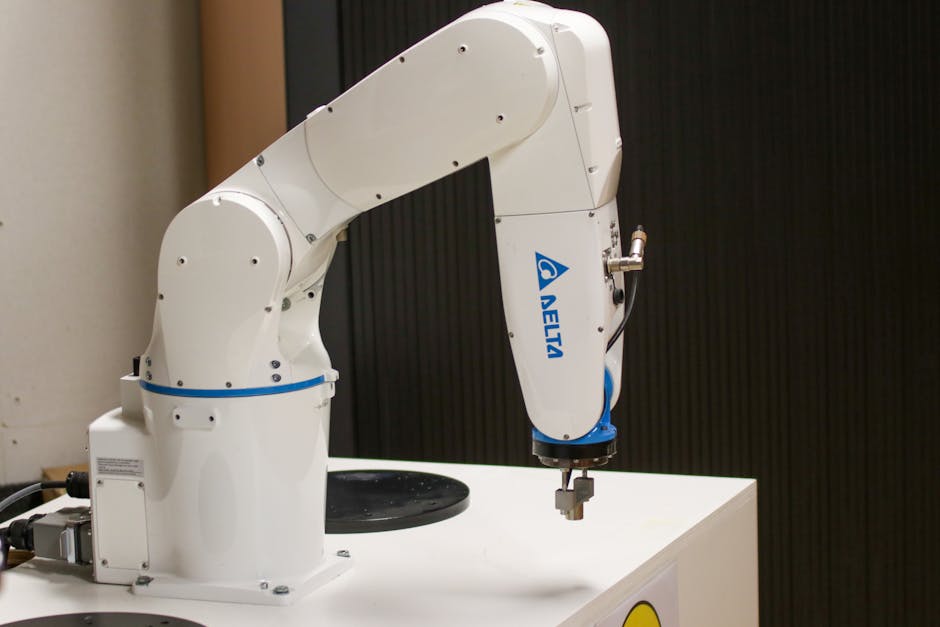
In an era where efficiency and precision are paramount, understanding “what is RPA” can be a game-changer for businesses of all sizes. Robotic Process Automation streamlines repetitive tasks, allowing human workers to focus on more strategic initiatives. This article will delve into the intricacies of RPA, exploring its benefits, applications, and impact on the workforce, ensuring you have the knowledge to leverage this powerful technology for your organization’s success. Join us as we uncover how RPA can not only enhance productivity but also shape the future of work.
What is Robotic Process Automation (RPA)?
Robotic Process Automation, often abbreviated as RPA, is a technology that allows software robots to automate repetitive and mundane tasks typically performed by humans. It’s like having a digital assistant that can handle various processes without needing constant human oversight.
But what exactly does this mean for businesses? In essence, RPA enables organizations to streamline their operations, reduce errors, and free up employees to focus on more strategic tasks. This leads to increased efficiency and productivity across the board.
- Enhances operational efficiency
- Reduces human error
- Frees up employee time
- Increases productivity
RPA works by using software to mimic the actions of a human interacting with digital systems. This means it can perform tasks like data entry, processing transactions, and even responding to customer inquiries. The beauty of RPA lies in its ability to handle high volumes of repetitive tasks swiftly and accurately.
Many businesses are now turning to RPA to stay competitive. By automating processes, they can reduce costs and improve service delivery. Imagine a world where your employees can dedicate their time to innovation rather than mundane tasks-this is the promise of RPA.
| RPA Benefits | Impact on Business |
|---|---|
| Cost Reduction | Lower operational expenses |
| Improved Accuracy | Fewer errors in processes |
| Scalability | Easily adapt to changing demands |
So, how does RPA differ from traditional automation? While traditional automation often requires extensive programming and can be costly, RPA is designed to be user-friendly. This means that even those without a technical background can implement RPA solutions in their business.
Furthermore, RPA can integrate with existing systems without the need for major changes. This flexibility makes it an attractive option for many organizations looking to enhance their process automation strategies.
- No extensive coding needed
- Seamless integration with current systems
- Quick deployment
In summary, RPA represents a significant advancement in the field of automation. It empowers businesses to optimize their processes while allowing human employees to engage in more valuable work. As the world continues to digitize, understanding what RPA is and how it can be leveraged will be crucial for any organization aiming for success.
Are you ready to embrace the future of work with RPA? It’s time to consider how this innovative technology can transform your business operations.
How does RPA work in businesses?
Robotic Process Automation (RPA) is transforming how businesses operate. At its core, RPA uses software robots to automate repetitive tasks that were once performed by humans. This means that mundane, time-consuming tasks can be completed faster and with fewer errors.
But how does it actually work? RPA software interacts with applications and systems just like a human would. It can execute tasks such as data entry, processing transactions, and even responding to customer inquiries.
- Automates repetitive tasks
- Reduces human error
- Increases efficiency
The process begins with identifying specific tasks that can be automated. These might include data extraction from emails, updating records in databases, or generating reports. Once these tasks are pinpointed, RPA tools are configured to perform them.
This configuration involves creating a workflow that the software robot will follow. Think of it as teaching a robot how to do a job. The robot learns the steps needed to complete the task, from start to finish.
| Task Type | RPA Benefits |
|---|---|
| Data Entry | Faster processing |
| Report Generation | Reduced errors |
| Invoice Processing | Cost savings |
Once implemented, RPA can significantly enhance business operations. It allows human employees to focus on more strategic tasks that require creativity and problem-solving skills. This shift leads to improved job satisfaction and productivity.
But it’s not just about replacing human effort. RPA works best when it complements human workers. For instance, while robots handle repetitive tasks, humans can oversee the process, ensuring everything runs smoothly.
So, what are the key components of RPA in a business setting?
- Software robots
- Defined workflows
- Integration with existing systems
In summary, RPA is a powerful tool that streamlines processes and enhances efficiency. By automating mundane tasks, businesses can not only save time and reduce costs but also empower their workforce to focus on what truly matters.
With RPA, the future of work is not about replacing humans but rather augmenting their capabilities. Isn’t it exciting to think about the potential for innovation and growth?
Benefits of Robotic Process Automation
Robotic Process Automation, or RPA, is transforming the way businesses operate. By leveraging software robots to automate repetitive tasks, organizations can streamline their processes and improve efficiency. But what exactly are the benefits of RPA?
One of the most significant advantages is the reduction in operational costs. With RPA, businesses can automate mundane tasks, freeing up human employees to focus on more strategic initiatives. This not only enhances productivity but also allows for better allocation of resources.
- Cost savings through reduced labor hours
- Increased accuracy and reduced errors
- Improved compliance and audit trails
Another key benefit is the speed of execution. Robots can perform tasks much faster than humans, which means processes that once took hours can now be completed in minutes. This acceleration can significantly enhance customer satisfaction as businesses respond more swiftly to inquiries and service requests.
Moreover, RPA can operate 24/7, which is a game changer for many industries. This means that processes can run continuously without breaks, leading to higher throughput and efficiency.
| Benefit | Description |
|---|---|
| Cost Efficiency | Reduces labor costs by automating tasks |
| Speed | Completes tasks faster than human workers |
| Availability | Operates around the clock, increasing productivity |
In addition to these benefits, RPA enhances accuracy. Software robots are programmed to follow specific rules and guidelines, which minimizes human error. This is particularly important in data-intensive processes where precision is crucial.
But, have you considered how RPA can improve compliance? By maintaining consistent workflows and providing detailed logs of every action taken, RPA helps organizations adhere to regulations more effectively.
- Enhanced data accuracy and integrity
- Improved compliance with industry regulations
- Detailed audit trails for accountability
Lastly, RPA can significantly boost employee morale. When workers are relieved from the burden of repetitive tasks, they can engage in more meaningful work. This leads to higher job satisfaction and can reduce turnover rates.
In summary, the benefits of Robotic Process Automation are numerous. From cost savings and speed to enhanced accuracy and employee satisfaction, RPA is paving the way for a more efficient future in business operations. Are you ready to embrace the automation revolution?
Limitations of Robotic Process Automation
Robotic Process Automation (RPA) has garnered significant attention for its ability to streamline business operations. However, it’s essential to understand the limitations that come with this technology. While RPA can handle repetitive tasks efficiently, it isn’t a one-size-fits-all solution.
One of the primary limitations of RPA is its inability to manage complex processes. RPA excels in automating rule-based tasks but struggles with processes that require human judgment. For instance, tasks that involve decision-making based on subjective criteria are often beyond the scope of robotic process automation.
- RPA cannot replace human intuition.
- It struggles with tasks that require emotional intelligence.
- Complex workflows may require human oversight.
Another challenge with RPA is its dependency on structured data. RPA tools are designed to interact with predictable datasets. When faced with unstructured or inconsistent data, these robots may falter. This limitation can lead to errors and inefficiencies, undermining the benefits of automation.
Additionally, the implementation of RPA can be resource-intensive. Organizations often need to invest time and money into training staff and maintaining the software. This need for investment can deter smaller businesses from adopting RPA solutions.
| Limitation | Impact |
|---|---|
| Complex Processes | Requires human involvement for decision-making. |
| Unstructured Data | Can lead to errors and inefficiencies. |
| Resource Intensive | Higher costs for smaller businesses. |
Furthermore, RPA lacks the ability to adapt to changing environments. If a business process changes, the RPA solution may require significant reprogramming. This rigidity can be a drawback in fast-paced industries where adaptability is crucial.
Another point worth noting is the potential for job displacement. While RPA can free employees from mundane tasks, it can also lead to concerns about job security. Organizations must balance the benefits of automation with the impact on their workforce.
In conclusion, while RPA offers significant advantages in terms of efficiency and cost savings, it is not without its limitations. Understanding these limitations is crucial for businesses considering the adoption of robotic process automation.
The key is to find the right balance between automation and human involvement. After all, some tasks are better suited for humans, and recognizing this can lead to more effective business processes.
Difference between RPA and AI
Robotic Process Automation (RPA) and Artificial Intelligence (AI) are often mentioned together, but they serve different purposes in the world of technology. Understanding what is RPA requires recognizing how it contrasts with AI.
RPA focuses on automating repetitive, rule-based tasks. It’s about using software robots to handle mundane processes that humans often find tedious. Think of it as a digital worker that can perform specific tasks without needing to think or learn.
In contrast, AI is designed to mimic human intelligence. It can learn from data, make decisions, and improve over time. While RPA executes tasks based on predefined rules, AI can adapt and evolve based on new information.
- RPA is task-oriented, while AI is knowledge-oriented.
- RPA executes repetitive tasks, while AI can manage complex decision-making.
- RPA is rule-based; AI is data-driven.
The main goal of RPA is efficiency. By automating repetitive tasks, businesses can save time and reduce errors. For example, RPA can handle data entry, invoice processing, or customer service inquiries without human intervention.
On the other hand, AI enhances automation by introducing cognitive capabilities. It can analyze data patterns, understand natural language, and even predict outcomes. This means AI can take on more complex processes that require reasoning or judgment.
| Aspect | RPA | AI |
|---|---|---|
| Purpose | Automate repetitive tasks | Mimic human intelligence |
| Learning | No learning capability | Learns from data |
| Complexity | Simple tasks | Complex decision-making |
So, how do these technologies work together? Many businesses leverage both RPA and AI to create a more robust automation strategy. RPA can handle the straightforward, repetitive tasks, while AI can analyze the data generated from these tasks to provide insights and improve processes.
This combination allows organizations to streamline operations, enhance productivity, and make informed decisions based on data.
In summary, while both RPA and AI play crucial roles in process automation, they do so in distinctly different ways. RPA automates tasks efficiently, whereas AI enables intelligent decision-making.
Understanding what is RPA and how it differs from AI can help businesses implement the right solutions for their automation needs. By knowing the strengths of each, organizations can better harness their potential and drive significant improvements in their operations.
Historic evolution of RPA technology
The journey of robotic process automation (RPA) technology is fascinating and reflects the broader trends in business automation. Initially, RPA emerged in the early 2000s, primarily as a means to automate repetitive tasks that were once handled by humans. This shift aimed to enhance efficiency and reduce human error in various processes.
As businesses began to recognize the potential of RPA, the technology evolved. Early RPA tools focused on simple task automation, often requiring extensive scripting and programming knowledge. However, as demand grew, developers began creating user-friendly software that enabled non-technical users to automate their tasks with ease.
- 2000s: Emergence of RPA tools
- 2010s: Rise of user-friendly automation software
- 2020s: Integration with AI and machine learning
This evolution didn’t just stop at simplifying the user interface. With advancements in artificial intelligence and machine learning, RPA technology began to incorporate more intelligent automation capabilities. This allowed businesses to not only automate simple tasks but also to handle complex processes that required decision-making based on data analysis.
Have you ever thought about how these advancements changed the landscape of business operations? The integration of AI with RPA means that robots can now learn from data patterns and adapt their processes accordingly. This makes them more effective than ever before, transforming how businesses operate.
| Year | Key Development |
|---|---|
| 2000s | Introduction of RPA tools |
| 2010s | User-friendly automation software |
| 2020s | AI integration for intelligent RPA |
As RPA technology progressed, companies began to leverage it not just for efficiency, but also for strategic advantages. By automating mundane processes, businesses could redirect human resources to more value-added activities. This shift not only improved productivity but also enhanced employee satisfaction, as workers could focus on tasks that required creativity and critical thinking.
The impact of RPA on various industries has been profound. From finance to healthcare, organizations have adopted RPA to streamline their operations. This has led to significant cost reductions and improved service delivery, which is crucial in today’s competitive landscape.
- Improved efficiency
- Cost reduction
- Enhanced service delivery
Looking ahead, the future of RPA seems bright. With the ongoing advancements in technology, we can expect more sophisticated robotic process automation solutions. These will likely integrate seamlessly with other business systems, creating a more interconnected and efficient operational framework.
In summary, the historic evolution of RPA technology showcases a remarkable journey from simple task automation to intelligent process automation. As businesses continue to embrace RPA, we can anticipate even more transformative changes in how we approach work and automation in the years to come.
Impact of RPA on employment
Robotic Process Automation (RPA) is transforming the way businesses operate. As companies adopt RPA, many wonder, “What is RPA doing to employment?” It’s a valid concern, considering how automation is reshaping job landscapes.
At its core, RPA automates repetitive tasks that were once performed by humans. This can lead to increased efficiency and reduced operational costs. However, the impact on employment is nuanced. While some jobs may become obsolete, new opportunities are also emerging.
- Increased efficiency in business processes
- Reduction in mundane tasks
- Emergence of new job roles focused on RPA management
One of the most significant effects of RPA is the shift in job responsibilities. Employees may find themselves transitioning from routine tasks to more strategic roles. For instance, instead of data entry, a worker might focus on analyzing the data that RPA software collects.
But what about the fear of job loss? It’s important to recognize that while RPA can replace certain tasks, it also creates a demand for skilled workers who can manage and maintain these robotic systems. The key is upskilling and adapting to new technologies.
| Job Impact | Potential Outcomes |
|---|---|
| Routine Task Automation | Job displacement in specific roles |
| New Job Creation | Increased demand for RPA specialists |
As businesses integrate RPA, they often see a shift in their workforce dynamics. Employees may be required to work alongside robots, enhancing collaboration between humans and machines. This partnership can lead to more innovative solutions and improved problem-solving.
It’s also essential to consider the sectors most affected by RPA. Industries like finance, healthcare, and customer service are already witnessing significant changes. The automation of processes in these fields can lead to faster service delivery and better customer experiences.
- Finance: Automated data processing
- Healthcare: Streamlined patient records
- Customer Service: Chatbots handling inquiries
In conclusion, the impact of RPA on employment is multifaceted. While some tasks may be automated, the demand for human oversight and strategic thinking remains strong. Embracing RPA means adapting to new roles and responsibilities, ultimately leading to a more efficient and innovative workforce.
So, as we ponder, “What is RPA?” we must also consider how we can best prepare for its influence on our careers and industries. The future of work will be about collaboration between humans and robots, rather than competition.
Applications of Robotic Process Automation
Robotic Process Automation (RPA) is transforming how businesses operate. But what exactly are its applications? RPA can streamline numerous processes, enhancing efficiency and reducing human error.
In various sectors, RPA is utilized to automate repetitive tasks. This includes data entry, invoice processing, and customer service interactions. Essentially, any task that follows a set pattern can be automated.
- Data extraction from documents
- Automated report generation
- Order processing and fulfillment
One of the most significant advantages of RPA is its ability to handle high-volume tasks. Businesses can deploy software robots to manage these mundane processes, allowing human employees to focus on more strategic initiatives. This not only boosts productivity but also improves job satisfaction.
Additionally, RPA can be integrated across various applications. For instance, it can pull data from one system and input it into another, ensuring seamless communication between platforms. This integration capability is a game changer for many organizations.
| Industry | Common RPA Applications |
|---|---|
| Finance | Invoice processing, compliance reporting |
| Healthcare | Patient data management, appointment scheduling |
| Retail | Inventory management, order processing |
RPA also plays a crucial role in enhancing customer experiences. For example, chatbots powered by RPA can handle customer inquiries 24/7. This means quicker response times and happier customers.
Moreover, RPA can analyze vast amounts of data quickly. This capability allows businesses to make informed decisions based on real-time insights. Imagine having the power to predict trends and adjust strategies accordingly!
- Enhanced customer service
- Data analysis and reporting
- Supply chain optimization
It’s important to note that while RPA can handle many tasks, it works best when paired with human oversight. The goal is not to replace human workers but to empower them. By automating repetitive tasks, employees can dedicate their time to creative and complex problem-solving.
In conclusion, the applications of RPA are vast and varied. From finance to healthcare, automation is reshaping industries. As businesses continue to explore RPA, the potential for innovation and efficiency is boundless.
So, what is RPA? It’s not just a tool; it’s a transformative approach to how we work.
RPA use cases in various industries
Robotic Process Automation (RPA) is making waves across multiple sectors. It’s not just a buzzword; it’s changing how businesses operate. So, what is RPA, and how is it being utilized in different industries?
Let’s dive into some real-world applications.
In finance, RPA is transforming the way tasks are handled. For instance, banks use RPA to automate transaction processing and compliance checks. This means fewer errors and faster processing times. Who wouldn’t want their transactions to be quicker and more accurate?
In healthcare, RPA streamlines patient data management. Hospitals implement RPA to handle scheduling, billing, and even patient follow-ups. This allows healthcare professionals to focus on what truly matters: patient care.
- Automated billing and claims processing
- Patient appointment scheduling
- Data entry for electronic health records
Manufacturing is another sector where RPA shines. Robotics and automation work hand-in-hand, allowing for efficient inventory management and order processing. Imagine robots handling repetitive tasks, leaving human workers to tackle more complex challenges.
Retailers are also jumping on the RPA bandwagon. They use automation to manage inventory levels and improve customer service through chatbots. This not only enhances the customer experience but also optimizes operations.
| Industry | RPA Use Case |
|---|---|
| Finance | Transaction processing |
| Healthcare | Patient data management |
| Manufacturing | Inventory management |
| Retail | Customer service chatbots |
In the insurance industry, RPA is used for claims processing and underwriting. By automating these processes, companies can reduce turnaround times significantly. This not only improves customer satisfaction but also enhances operational efficiency.
Moreover, the telecommunications sector benefits from RPA by automating customer onboarding and service requests. This leads to quicker resolutions and a better overall experience for customers.
- Claims processing in insurance
- Customer onboarding in telecom
- Service request automation
As we can see, RPA isn’t just for tech companies; it’s a powerful tool for any business looking to enhance efficiency. The potential for RPA applications is vast, and as technology evolves, so will the ways we utilize it.
So, next time you hear “what is RPA,” remember it’s not just about robots; it’s about transforming processes across industries. Isn’t that exciting?
In summary, understanding what RPA (Robotic Process Automation) is can significantly enhance how businesses operate in today’s digital landscape. RPA streamlines repetitive tasks, reduces human error, and allows organizations to reallocate human resources to more strategic initiatives. The technology has proven to be a game-changer across various industries, from finance to healthcare, enabling companies to improve efficiency and productivity while cutting operational costs. As businesses continue to embrace digital transformation, the role of RPA will only become more prominent, providing the agility needed to adapt to ever-evolving market demands. Whether you are a business leader considering RPA implementation or a professional looking to expand your skill set, it is clear that understanding what RPA is and how it can benefit your organization is crucial for staying competitive. As we look to the future, the integration of RPA with other advanced technologies such as artificial intelligence and machine learning will undoubtedly open new avenues for innovation, making it an exciting area to watch. Embracing RPA today not only prepares businesses for the challenges of tomorrow but also positions them at the forefront of operational excellence.
Leave a Reply